
Anti-Glare Window Film in West Kelowna: A Practical Guide

The darkest window film isn’t automatically the best fix for screen glare. With anti-glare window film West Kelowna property owners can address distracting sunlight, but the right balance of glare reduction and natural light depends on the windows, the room and how the space is used.
If sunlight makes a home office difficult to work in or turns a bright living room into an uncomfortable space, it’s understandable to want relief without making the room feel dim. Product descriptions can be hard to compare, and existing glass isn’t always suitable for every film. A careful assessment helps clarify what’s possible before installation.
This guide explains how film specifications and window conditions can affect visual comfort and appearance. It also offers a practical way to compare options and prepare for a professional assessment. Sunnyside Glass Solutions installs window film for residential and commercial clients across the Okanagan, including West Kelowna. Use the steps below to identify your priorities and prepare useful questions about your property.
Table of Contents
What anti-glare window film can do for West Kelowna rooms
A bright window can make a room feel open while sending sunlight across a monitor, television or work surface. Architectural anti-glare film is selected to reduce distracting light and reflections, helping make a space more comfortable to use without automatically eliminating daylight. The Window film overview describes the technology and its varied applications, including managing heat and glare.
Look for practical signs of a glare problem: reflections that make a screen hard to see, sunlight falling across a work surface, or a seating area that becomes uncomfortable at certain times. The cause and suitable response can vary with window direction, room use, nearby reflective surfaces and sunlight that shifts through the day and seasons. For anti-glare window film West Kelowna homeowners and businesses, noting when and where the problem occurs is a useful first step toward choosing an option.
Which rooms and activities are most affected by window glare?
Start with the activity, not just the window. In a home office, glare may obscure a computer screen or fall across a desk. In a living room, it may interfere with television viewing or make a favourite seat uncomfortable. Dining areas can be affected during meals, while commercial workspaces may have screen-based tasks or workstations close to windows. Record the time, season, affected surface and activity. A room that feels comfortable in the morning may behave differently later in the day.
Is anti-glare film different from blackout or privacy film?
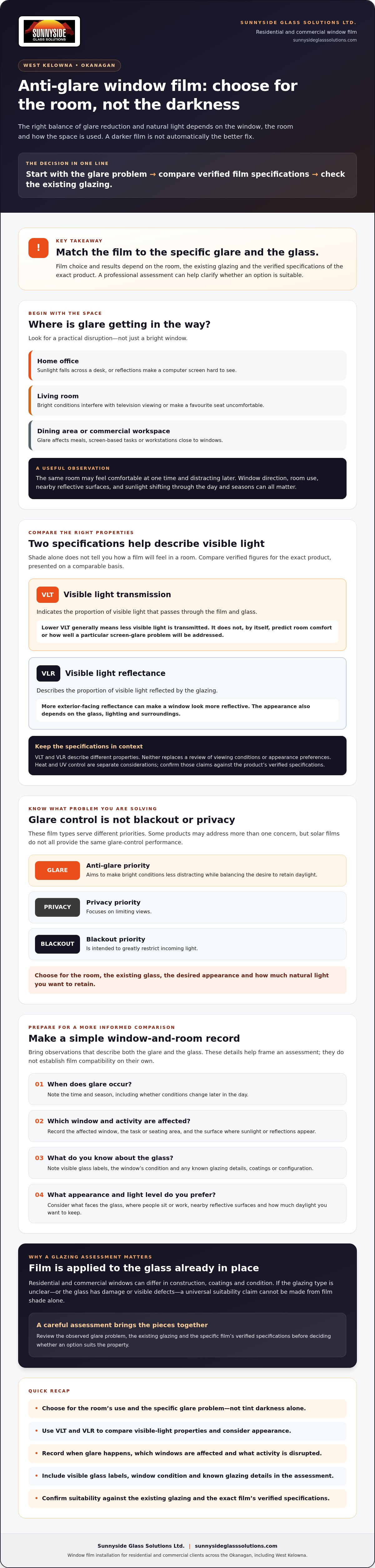
Yes. These films serve different priorities: glare management aims to make bright conditions less distracting, privacy film focuses on limiting views, and blackout film is intended to greatly restrict incoming light. Glare control is not the same as complete blackout or privacy. Some products may address more than one concern, but solar films don’t all provide the same glare-control performance. Selection depends on the room, existing glass, desired appearance and how much natural light you want to retain.
Before choosing, consider what faces the glass, where people sit or work, and whether nearby surfaces contribute to reflections. These observations help frame an assessment, but they don’t establish film compatibility. A professional review of the existing glazing and the specific film’s verified specifications can help determine whether an option suits the property.
How anti-glare window film works on residential and commercial glass
Film changes how light interacts with a window, but a product’s shade alone doesn’t tell you how it will feel in a room. Two useful specifications are visible light transmission and visible light reflectance. Together, they help describe how much visible light passes through the glass and how much is reflected. This gives you a more practical basis for comparing options than appearance descriptions alone.
What do visible light transmission and reflectance tell you?
Visible light transmission (VLT) indicates the proportion of visible light that passes through the film and glass. A lower VLT generally means less visible light is transmitted, but it doesn’t by itself predict how comfortable a room will feel or how well a particular screen glare problem will be addressed. Visible light reflectance (VLR) describes the proportion of visible light reflected by the glazing. More exterior-facing reflectance can give a window a more reflective appearance, though the result also depends on the glass, lighting and surroundings.
Compare verified specifications for the exact film being considered, and check that figures are presented on a comparable basis. VLT and VLR describe different properties. Neither replaces a review of the room’s viewing conditions or your appearance preferences. The International Window Film Association is a reference point for broader information about window film. Heat and UV control are separate considerations, so don’t assume a film’s glare performance proves how much heat or UV it controls. Confirm those claims against the specific product’s verified specifications.
Why does existing glass matter when selecting film?
A film is applied to existing glazing, so the glass construction and condition are part of the selection decision. Residential and commercial windows can differ in their configuration, coatings and overall condition. Without knowing those details, it isn’t possible to make a universal claim that a particular film will be suitable. If the glazing type is unclear, or the glass has damage or visible defects, have it reviewed before proceeding.
For anti-glare window film West Kelowna projects, a professional assessment can connect the room’s daylight needs with the window’s actual glazing and the chosen film’s specifications. Sunnyside Glass Solutions Ltd. installs window film for residential and commercial clients in West Kelowna and across the Okanagan. Its professional window film installation guide offers broader context on the installation process. The company’s window film installer page provides information about its services.
Compare anti-glare film options without assuming darker is better
A darker-looking film can reduce the light entering a room, but darkness alone doesn’t establish how effectively a specific film will address glare. Compare the verified visible light transmission (VLT) and visible light reflectance (VLR) figures for each film, then consider the window, the room’s use and the appearance you want. The table below is a guide to interpreting those specifications, not a comparison of particular products.
How can you balance glare reduction and natural daylight?
Rank your priorities before comparing options: glare relief, daylight retention, privacy and exterior appearance. A screen-focused workspace may call for a different balance than a bright living area where preserving natural light matters. Include the actual window conditions in the comparison, such as when glare occurs and what activities are affected. Review verified specifications for the exact film rather than relying on descriptions such as “light” or “dark.”
The right film depends on both the existing glass and the room’s comfort priorities, not tint darkness alone.
When should you consider alternatives or a professional assessment?
Film selection addresses light-management goals. It isn’t a repair for damaged glass or a failed sealed window unit. If you notice signs of a glazing problem, have the window assessed rather than assuming film will resolve it. If you’re unsure about glass compatibility or a film’s stated performance, ask an installer to review the glazing and specifications. This helps distinguish a glare concern from a window condition that may need a different solution.
Assess your West Kelowna windows before choosing anti-glare film
A few clear observations can make an assessment more useful. Before comparing films, record what the glare disrupts and which windows are involved. Photos can show the room layout, window position and visible glass condition, but they can’t confirm whether a film is suitable for a particular glazing assembly. That requires a review of the glass and proposed film.
What should you record about each affected window?
Use this checklist for each problem area. Include details you know, but don’t try to diagnose the glass or its compatibility yourself.
Room and window: Note the room, approximate window dimensions and which window is affected.
Timing and orientation: Record when glare is most disruptive and, if known, which direction the window faces. Include seasonal changes you’ve noticed.
Activity affected: Specify whether sunlight reflects on a screen, falls across a seating area or interferes with another regular task.
Glass details: Describe the visible condition, note any labels you can see and include known glazing details without drawing conclusions about film suitability.
Desired result: Say how much daylight you’d like to retain and whether a change in the window’s appearance would be acceptable.
Photos and notes can support an initial conversation, especially if they show the affected area at the time glare occurs. They’re useful context, not confirmation of final film selection. The residential window film guide also provides broader context for considering film in a home.
What should you ask an installer before work begins?
For an anti-glare window film West Kelowna assessment, ask which characteristics of the proposed film address your stated concern, and request its specifications. Confirm that the film is suitable for the specific glass assembly rather than relying on a general product description. Discuss the expected appearance and daylight effect, along with preparation, installation steps and aftercare, before approving the work.
Clear answers help set realistic expectations. Sunnyside Glass Solutions Ltd. installs window film for residential and commercial clients in West Kelowna and across the Okanagan. Details about the affected windows, glare patterns and glazing can help focus a conversation about your property.
Arrange professional anti-glare window film installation in West Kelowna
A measured installation process begins with understanding the problem, not selecting a film by appearance alone. The installer considers which room is affected, how glare behaves through the day, the existing glazing, and the look and daylight level you want to maintain. From there, the proposed film’s verified specifications can be reviewed against both the glass and your comfort priorities.
Film selection and results depend on the specific windows and the film chosen. A professional recommendation should address suitability for the glazing assembly as well as the intended light-management outcome. Once the film is confirmed as appropriate, the installation plan can be discussed, including preparation, the work involved, expected appearance and aftercare.
What happens during a professional film assessment?
The installer reviews the affected room and glass, discusses when glare occurs, and considers what you want the finished space to feel and look like. Product specifications help inform the recommendation, but they need to be considered in context rather than treated as a guarantee of a particular result. A suitable recommendation should explain why the film may fit the window and how its characteristics relate to your priorities, such as reducing reflections while retaining comfortable daylight.
How can you prepare for a local installation discussion?
Bring your notes about the affected windows, glare patterns and room use, along with photographs and any known details about the glass assembly. A short list of questions can keep the discussion focused:
How might the proposed film affect daylight and reflectance?
What appearance should I expect from inside and outside?
Is this film suitable for the specific glazing in my property?
What preparation, installation steps and aftercare should I plan for?
Sunnyside Glass Solutions Ltd. installs window film for residential and commercial clients across the Okanagan, including West Kelowna. For an anti-glare window film West Kelowna project, a discussion can help clarify what should be assessed and which specifications matter. It won’t guarantee a particular outcome, but it can support an informed choice based on your windows and priorities.
Contact Sunnyside Glass Solutions to discuss window film installation for your West Kelowna property.
Choose a film solution that suits your windows
Reducing glare doesn’t have to mean choosing the darkest film. The right option depends on the room’s comfort priorities, the amount of daylight you want to retain, and verified specifications such as visible light transmission and reflectance. Your existing glazing matters too, so observations and photos are useful starting points, not a substitute for checking film suitability.
For anti-glare window film West Kelowna property owners can begin by noting which windows are affected, when glare occurs and what activities it disrupts. A professional assessment can then help connect those conditions with a suitable film and realistic expectations for appearance and performance.
Sunnyside Glass Solutions Ltd. installs residential and commercial window films across the Okanagan, including West Kelowna. Its service area also includes Penticton, Kelowna, Summerland, Peachland and Vancouver. If you’re considering options for your home or business, a review of your glazing and priorities can help determine what to discuss next.
Frequently Asked Questions
What is anti-glare window film, and how does it work?
Anti-glare window film is an architectural film selected to reduce distracting light and reflections passing through windows. Its effect depends on the specific film’s properties and the existing glazing, so it’s useful to review verified product specifications rather than choose by shade alone. Specifications such as visible light transmission describe how much visible light passes through, while reflectance helps indicate how reflective the window may look.
Can anti-glare window film reduce glare without making a room too dark?
It may be possible to reduce glare while retaining comfortable daylight, but the result depends on the film and the window. A darker film isn’t automatically the better choice. Compare verified specifications, including visible light transmission, and consider how much brightness you want to preserve in the affected room. For anti-glare window film West Kelowna property owners should have the specific glazing and room conditions assessed before settling on an option.
Does anti-glare window film work on all types of windows?
No single film can be assumed suitable for every window. Glass construction, condition and the specific film all matter, so compatibility should be confirmed for the actual glazing assembly before installation. If you don’t know the glass type, note any visible labels and tell the installer what you know. A professional review can help establish whether the proposed film is appropriate, rather than relying on a general rule.
How do I choose anti-glare film for a home office or living room?
Start with how you use the room. For a home office, note when glare affects screens or work surfaces. In a living room, consider television viewing, seating and the daylight you want to keep. Rank glare relief, daylight retention, privacy and exterior appearance, then compare verified specifications for suitable films. The best balance can differ between rooms, even within the same property.
Will anti-glare window film change the appearance of my windows from outside?
It can, depending on the film’s visible light reflectance, the existing glass and surrounding light conditions. Some films may create a more reflective appearance, while others may look different. Don’t assume appearance from a product description alone. Ask to review the exact film’s verified specifications and discuss how the proposed option may look from both inside and outside before approving installation.
How long does professional window film installation take?
Installation time depends on the project, including the number and size of windows, access and the work required to prepare the glass. Without those details, a reliable duration can’t be stated. During your discussion, ask the installer to explain the expected schedule for your particular property, along with preparation and aftercare. Confirm these details before arranging installation so expectations are clear.
How much does anti-glare window film installation cost in West Kelowna?
There isn’t enough information to give a reliable price for your project. The film selected, the number and size of windows, and installation requirements can affect the quote, so request project-specific pricing after the glazing and scope are reviewed. Sunnyside Glass Solutions installs window film for clients in Penticton, Kelowna, Summerland, Peachland, West Kelowna and Vancouver. Share your window details when asking about your project.
Can window film help with glare from screens and direct sunlight?
A film selected for glare management may help make direct sunlight and reflections on screens less distracting. The degree of change depends on the exact film, glazing and light conditions, so it can’t be guaranteed from the category name alone. Note when sunlight affects your screen or workspace, then ask an installer to assess the window and explain how the proposed film’s specifications relate to that concern.


Comments