
How to Reduce Summer Window Heat and Improve Home Comfort

The sunniest window can also be a home’s main route for summer heat. If you’re looking at how to reduce heat from windows in summer in Summerland, start by limiting direct sunlight with solar film or well-fitted shades; where windows are drafty or show condensation, replacing the sealed glass unit may also help reduce unwanted heat transfer. The right approach depends on whether the main issue is strong sun, poor insulation, or air leaks.
It’s frustrating when a bright room becomes uncomfortable and the cooling system has to work harder. This guide explains how solar heat enters through windows, which treatments can help reduce it, and how to choose practical shading for different rooms. You’ll also learn when window film or sealed window unit replacement may help, so you can make a more informed decision about improving comfort at home.
Table of Contents
1. What type of windows are best for reducing heat?
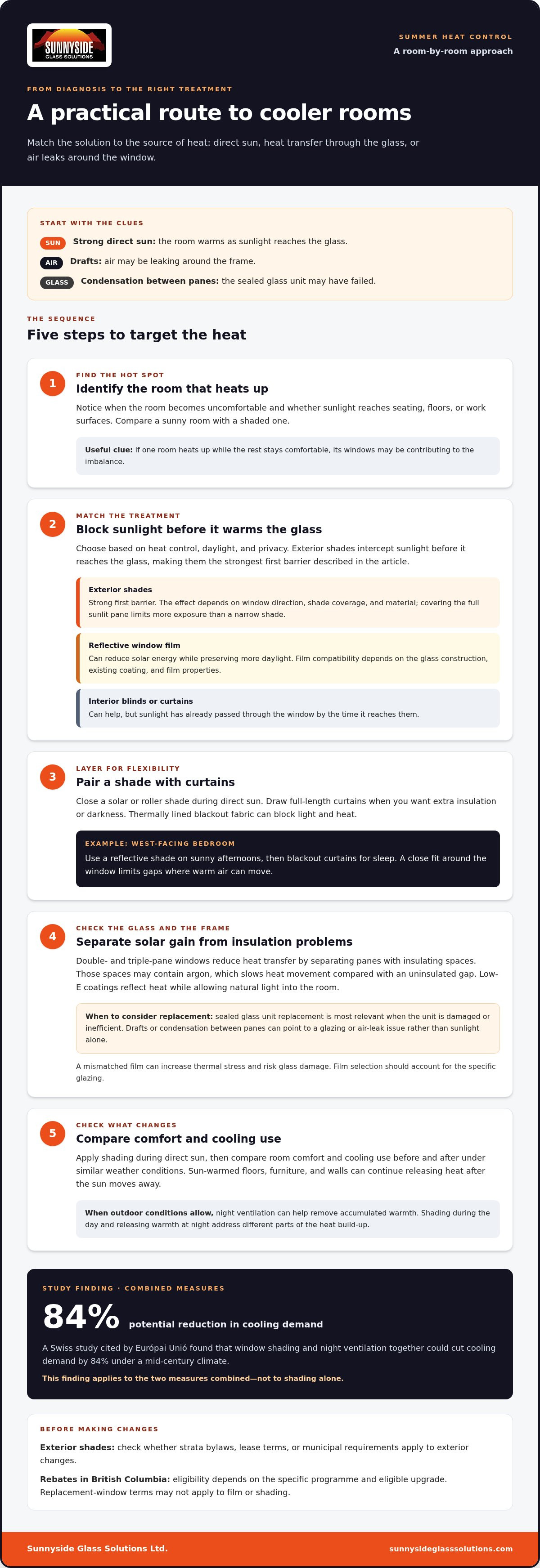
In Summerland homes, the right solution depends on how heat enters each room. Direct sunlight adds solar heat through glass, while weak insulation allows heat to pass through. Gaps around frames let hot outdoor air in. Notice when a room warms up: strong afternoon sun points to solar gain, while a persistent draft suggests air leakage. Condensation between panes can indicate a failed sealed unit that affects insulation.
Which covering blocks the most heat? Exterior shades usually provide the strongest first barrier because they intercept sunlight before it reaches the glass. Reflective window film can also reduce solar energy while preserving more daylight. Interior blinds and curtains help, but sunlight has already passed through the window. Choose based on whether heat control, daylight, or privacy matters most.
Double- and triple-pane windows reduce heat transfer by separating panes with insulating spaces. Those spaces may contain argon, which slows heat movement compared with an uninsulated gap. Low-E coatings reflect heat while allowing natural light into the room. Together, insulated glazing and a Low-E surface address heat transfer through the glass more directly than curtains alone. Glass replacement is most relevant when the sealed unit is damaged or inefficient.
Layer treatments to manage sunlight and insulation. Pair a solar or roller shade with full-length curtains: close the shade during direct sun and draw the curtains when you want extra insulation or darkness. Thermally lined blackout fabric can block light and heat. For example, a west-facing bedroom can use a reflective shade on sunny afternoons, then blackout curtains for sleep. A close fit around the window limits gaps where warm air can move.
How much can exterior shades reduce indoor heat gain? They intercept direct sunlight before it warms the glass and interior surfaces. The effect depends on window direction, shade coverage, and material. Covering the entire sunlit pane limits more exposure than using a narrow shade.
Are there strata, landlord, or local rules for exterior shades in Summerland? Exterior changes may be subject to strata bylaws, lease terms, or municipal requirements. Distinguish interior treatments from changes visible on the building exterior.
In British Columbia, rebate eligibility depends on the specific programme and eligible upgrade. Don’t assume terms for replacement windows also apply to window film or shading, since each is a distinct measure.
Can window film damage double-pane or Low-E windows? Compatibility depends on the glass construction, existing coating, and film properties. A mismatched film can increase thermal stress and risk glass damage, so film selection should account for the specific glazing.
2. Potential comfort, energy-bill, and HVAC benefits
Reducing solar heat through windows can improve comfort in the rooms you use most. A west-facing living room, for example, may absorb direct afternoon sun through its glazing. Shading that glass can reduce heat entering the room, helping limit hot spots near windows and temperature differences across the space.
For a practical assessment, compare a sunny room with a shaded one. Note when each becomes uncomfortable and whether direct sunlight reaches seating, floors, or work surfaces. If one room heats up while the rest stays comfortable, its windows may contribute to the imbalance. Addressing that source can make indoor temperatures feel steadier without simply lowering the thermostat.
Cooling demand is also connected to how much heat enters the home. A Swiss study found that window shading and night ventilation together could cut cooling demand by 84% under a mid-century climate, according to Európai Unió. The finding concerns those measures combined, not shading alone. It illustrates why managing daytime sun and releasing accumulated warmth at night can work together.
Reducing heat entering through windows can lower cooling demand and the time an air conditioner runs during hot periods. Less runtime can ease the workload on HVAC equipment, which removes heat from indoor air. Window improvements don’t replace appropriate cooling or maintenance; as the experts at Around the Clock Heating and Air Conditioning point out, understanding and servicing internal system components is just as critical to overall efficiency. Instead, reducing incoming solar heat gives the system less heat to remove.
Energy bills reflect a home’s cooling needs, equipment, insulation, and how occupants use the space. When direct sunlight repeatedly warms a room, shading can reduce one source of cooling demand. The result depends on window exposure, home layout, and existing HVAC performance. Track cooling use alongside room comfort to see whether a change makes a practical difference.
Consider the whole room, not just the glass. Sunlight can warm floors, furniture, and interior walls, which release heat after the sun moves away. Closing shades before strong sunlight reaches these surfaces helps limit the heat stored indoors. Night ventilation can then remove some accumulated warmth when outdoor conditions allow.
Use a simple sequence: identify the hottest room, observe its sun exposure, then apply shading during direct sun. Compare comfort and cooling use before and after under similar weather conditions. If drafts or condensation accompany the heat, the issue may involve the sealed glazing rather than sunlight alone. Separating these symptoms helps target the right improvement.
For Summerland homeowners weighing options, window heat-control choices can be considered alongside the room’s exposure and existing glass. Explore window heat-control options as a next step when sunlight remains a persistent source of indoor heat.
3. Room-by-room shade recommendations
In Summerland, east-facing windows receive morning sun, while west-facing windows catch late-day sun. South-facing windows can receive sun for much of the day, depending on nearby shade and roof overhangs. Lower west-facing shades by 3 p.m. to limit direct afternoon sunlight before it reaches deeper into a room. To decide how to reduce heat from windows in summer in Summerland, note each room’s sun exposure first.
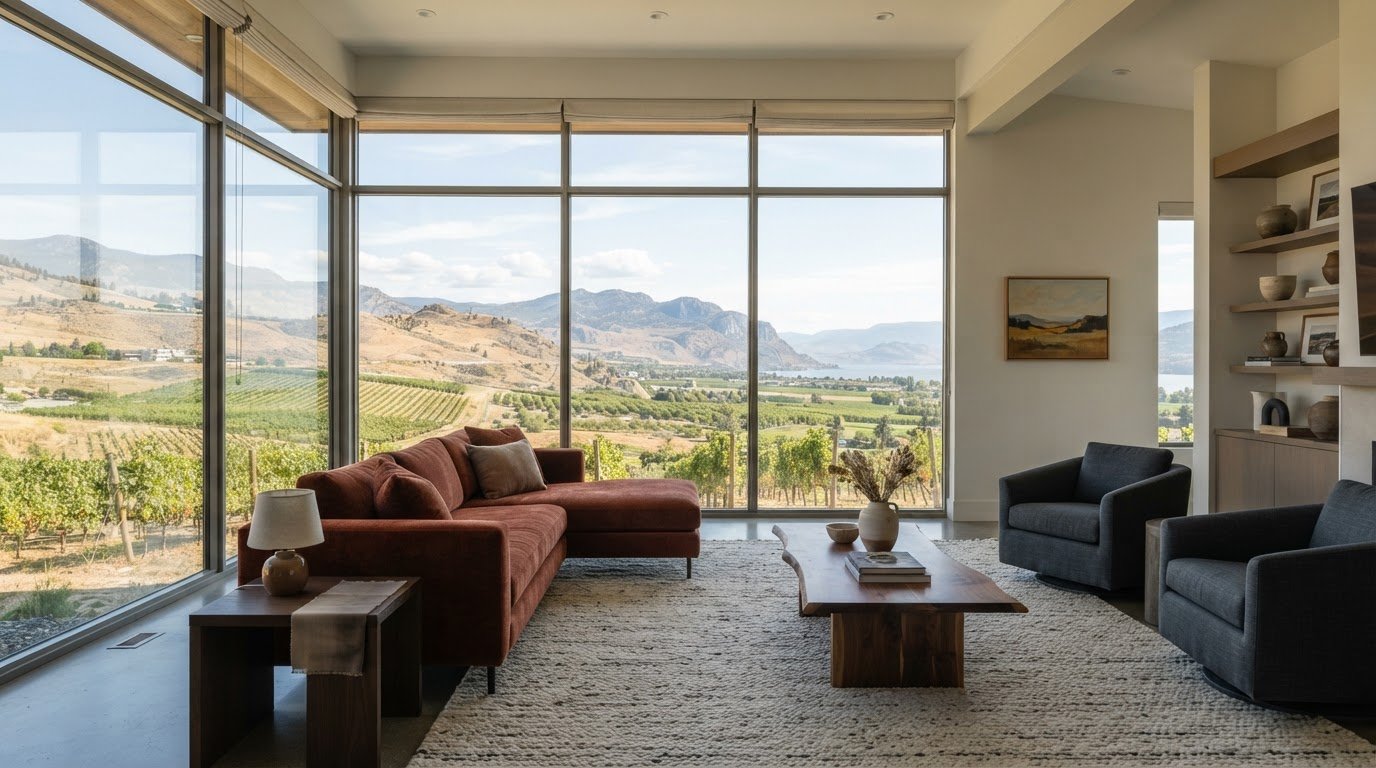
In living rooms, solar or light-filtering roller shades balance sun control with daylight. Choose a shade that reduces glare on television screens while keeping the room bright. For example, lower it across a sunlit window during afternoon viewing, then raise it when direct sun moves away. Full coverage matters: uncovered glass can still create a bright, warm patch on nearby seating or flooring.
Bedrooms can benefit from cellular blackout shades or reflective roller shades. Cellular shades trap air between the window and room, while blackout fabric also limits early light. A reflective roller shade may suit a bedroom with strong afternoon exposure. Close it before sunlight reaches the bed or interior surfaces, then use curtains if you want added darkness. This approach supports sleep while reducing solar heat entering through the glass.
For a home office, solar screen shades with glare control can make screens easier to view. Position the shade to reduce reflections on a computer monitor without unnecessarily darkening the workspace. If the desk sits beside a west-facing window, lower the shade before late-day glare reaches the screen. Adjust it as sunlight shifts, since screen angle and desk placement affect glare.
Bathrooms can use light-coloured roller shades to provide coverage without making the space feel unnecessarily dim. In a small bathroom with a bright window, lower the shade during direct exposure and raise it when sunlight passes. In any room, a shade fitted close to the window reduces gaps around its edges. A loose or narrow treatment can leave part of the glass exposed.
Make the routine specific to each window rather than closing every shade all day. Start by noting which rooms receive morning or afternoon sun, then lower their shades before direct light enters. A simple room-by-room plan could pair morning shade use in an east-facing bedroom with a 3 p.m. adjustment for west-facing living-room windows. Reassess placement if furniture, desks, or seating move.
To reduce heat from windows in summer in Summerland, match each shade to the room’s use and sun exposure. A light-filtering living-room shade preserves daylight, while a bedroom blackout shade prioritizes darkness. In an office, screen shades address glare; in a bathroom, a light-coloured roller shade offers a practical balance. Consider window direction and the hours of direct sunlight when choosing.
4. Solar heat gain through windows
Solar heat gain begins when sunlight passes through window glass and warms indoor surfaces. Floors, furniture, and walls absorb that energy, then release heat into the room. A west-facing living room may feel hottest after afternoon sun reaches its windows. The glass can also conduct outdoor heat inward, especially when glazing provides limited insulation. These effects combine, so a sunny room can remain warm after direct sunlight moves away.
Window direction helps explain when heat builds up. East-facing glass receives morning sun, while west-facing glass receives late-day sun. South-facing windows may receive sunlight across more of the day, depending on overhangs and nearby shade. Observe the room at different times, including around 3 p.m. for west-facing windows. Note when sunlight reaches the floor or seating, then compare that timing with when the room becomes uncomfortable.
Solar heat gain depends on more than the glass alone. The amount of exposed glazing, window orientation, and surrounding shade all affect indoor warming. A large, unshaded window can admit more sunlight than a smaller window protected by a roof overhang. Interior surfaces matter too: dark flooring or furniture in direct sun can absorb heat. Track which surfaces receive sunlight to identify where shading could help most.
Older or inefficient windows can admit sunlight and hot air, raising indoor temperatures and making air conditioning work harder—an issue residential climate specialists like Ultra Air Heating and Cooling frequently see when homes battle uneven heat gain and overworked cooling equipment. Check for drafts around the frame by noticing moving air near the edges. Condensation between panes can point to a problem with the sealed glass unit. These signs differ from a sunny patch that appears only during direct exposure. Separating the symptoms helps distinguish solar gain from air leakage or weak insulation.
Glass and coatings influence how much solar energy enters. Low-E coatings reflect heat away while allowing natural light inside. Solar film can reflect solar energy and reduce heat and UV rays. The effect of an improvement varies with the home’s design and climate. Film or shade cannot correct a draft around the frame, so address the source rather than treating every warm room alike.
Use a simple observation routine before choosing a change. Record which windows receive direct sun, when it reaches them, and which indoor surfaces warm up. Then lower a shade before sunlight reaches those surfaces and compare room comfort later. For example, if a west-facing office heats up near the end of the day, shade that window before direct sun reaches the desk. This connects the measure to the heat source.
5. What are the most effective ways to reduce heat through windows in summer?
Start with the window receiving direct sun, then choose a measure that addresses the problem. A west-facing window heating a late-day living room needs strong solar control. A draft around the frame needs sealing instead. Combining targeted shading with a close fit can address more than one source of heat without darkening every room throughout the day.
Cellular shades trap air between the window and the room, creating an insulating barrier. Solar shades with 1% or 3% openness are recommended for heat reduction. The smaller opening limits more sunlight and views, while the more open fabric preserves greater visibility. Choose based on how much glare reaches the room and whether maintaining an outdoor view matters.
Mounting position affects coverage. Outside-mounted shades can provide better coverage and insulation than inside-mounted shades, especially on large or irregular windows. They extend beyond the glass and reduce exposed edges where sunlight can enter. If exterior mounting isn’t practical, choose an interior shade that fits snugly against the window frame. A loose fit leaves gaps for sunlight and warm air.
Roller blinds block sunlight and can reduce indoor temperatures, according to Európai Unió. In a west-facing office, lowering a roller blind before late-afternoon sun reaches the desk limits direct exposure. Reflective or solar shades can also manage incoming solar energy while maintaining some daylight. Choose a treatment suited to the glass and room, rather than relying on colour alone to judge performance.
Check the frame for cracks before adding more shading. Caulking or weatherstripping can seal gaps around window frames and reduce air leakage. For example, if air moves near a window edge even after the shade is lowered, inspect the frame’s joints. Sealing those openings tackles air infiltration, while a shade primarily blocks sunlight. Addressing both issues can make the room more comfortable.
Exterior measures can stop sunlight before it reaches the glass. Awnings and shutters provide direct shade, while landscaping can shade exposed windows when placed strategically. Consider the sun’s path and nearby obstructions before choosing placement. For a large, sun-exposed pane, an exterior shade can cover more glass than a narrow interior blind. Align shade coverage with the window to limit uncovered areas.
Use a practical sequence: observe which window heats the room, fit a snug shade, and seal frame gaps. Compare comfort at the same time of day after the change. If solar exposure remains difficult to manage, discuss window heat-control options for your home.
Sunnyside Glass Solutions: Window Film Installation
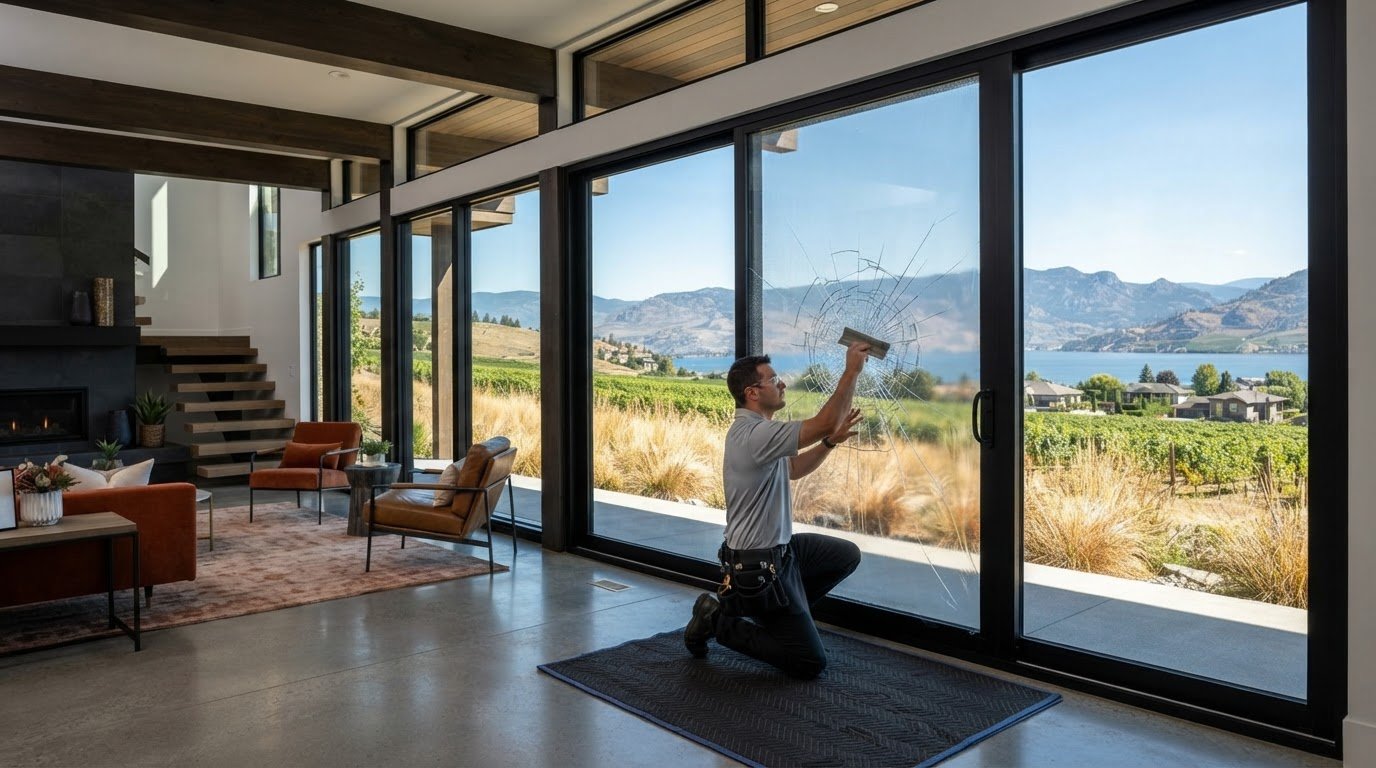
Sunnyside Glass Solutions provides Window Film Installation for homes where direct sunlight makes rooms uncomfortable. Solar film can reflect solar energy and reduce heat and UV rays while preserving the existing window rather than replacing the whole frame. It may suit a sun-exposed room where shading alone doesn’t address glare or heat entering through the glass.
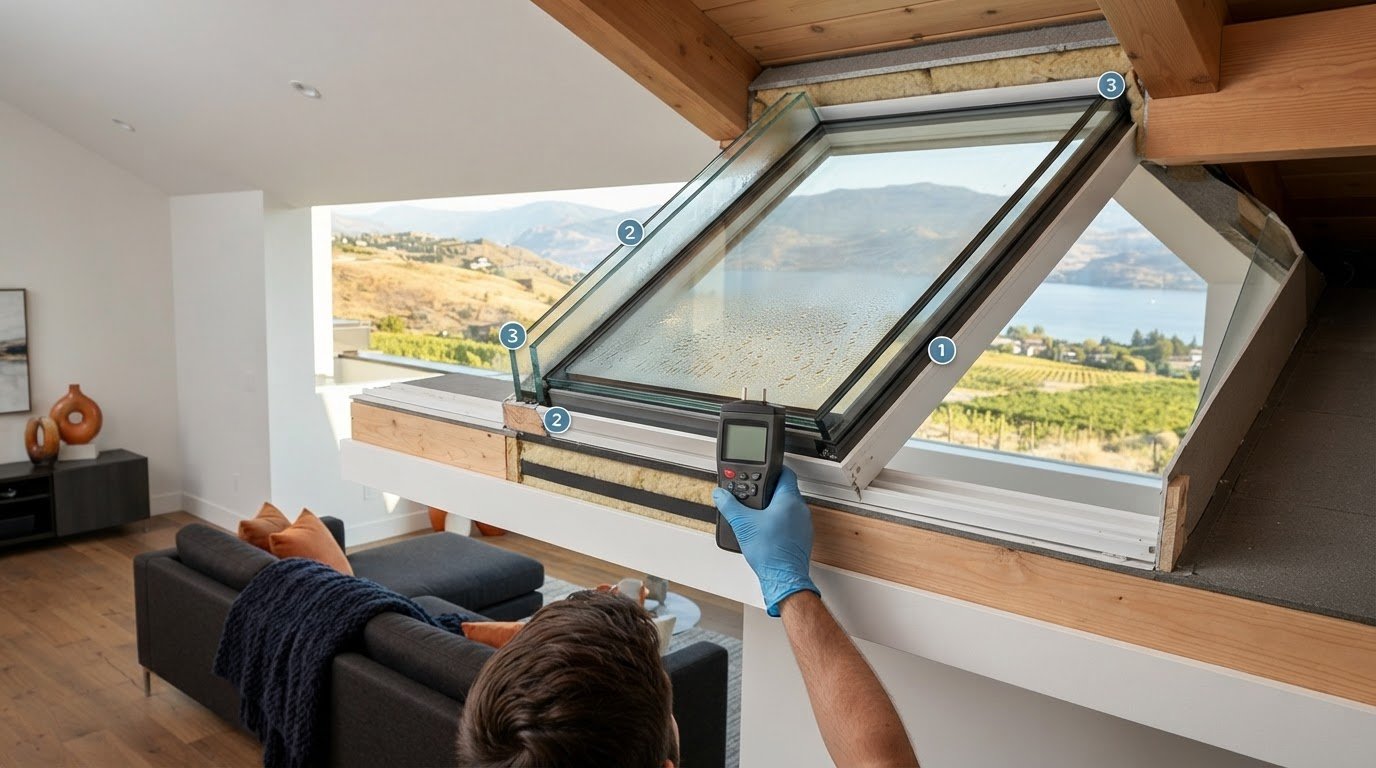
If you notice drafts or condensation between panes, the issue may involve the sealed glass unit, not just solar gain. Sunnyside Glass Solutions provides Sealed Window Unit Replacement to address this different problem. Identifying whether sunlight, air leakage, or glazing performance is the main concern helps guide the next step.
For guidance on window film or sealed glass replacement for your home, contact Sunnyside Glass Solutions.
Make your next summer more comfortable
Turn this summer’s observations into a practical plan for the next warm spell. Note which rooms become uncomfortable, when sunlight reaches them, and whether the issue continues after the sun moves. This record helps focus improvements where they matter most, rather than changing every window at once. If you’re considering how to reduce heat from windows in summer in Summerland, begin with the room that most affects your daily comfort and identify whether sun, drafts, or glazing is the main concern.
For persistent solar heat, a window-focused solution may be the next step. Sunnyside Glass Solutions offers Window Film Installation and Sealed Window Unit Replacement, addressing different concerns at the glass. A conversation can help you consider which approach fits the conditions you’ve noticed at home. Contact Sunnyside Glass Solutions to discuss your windows and plan a more comfortable living space for summer.
Frequently Asked Questions
How Much Heat Can Energy-Efficient Windows Block?
Energy-efficient windows limit heat transfer, but no single percentage applies to every home. Performance varies with window size, orientation, glazing, shade, and local climate. A shaded south-facing unit and an unshaded west-facing unit can behave differently. Compare a room’s afternoon temperature and sunlight before choosing an upgrade. Also distinguish incoming sunlight from drafts, since glazing improvements and air sealing address different pathways.
What Causes Heat to Enter Through Windows?
Heat enters through sunlight passing through glass, heat moving across poorly insulated glazing, and outdoor air leaking through gaps. These causes can overlap. For example, a sunny room may feel hot beside the glass, while a draft near the frame points to air leakage. Observe where and when discomfort occurs, then match the remedy to the source rather than assuming every warm window needs replacement.
What Type of Windows Are Best for Reducing Heat?
Look for double- or triple-pane glazing with insulating gas and Low-E coatings when selecting windows for heat control. The right option depends on the existing opening and the problem you’re addressing. For instance, an intact frame with a failed or fogged sealed unit may need glass-unit replacement, while a sound window receiving intense sun may benefit more from solar control. Match the improvement to the symptoms.
What Types of Window Film Work Best for Hot Summer Climates in Canada?
Solar-control film is designed to reflect solar energy and reduce heat and UV rays, making it relevant for sun-exposed Canadian homes. The best choice depends on the glazing, window orientation, and how much natural light you want to retain. For example, a bright room used during the day may need a different balance than a room where glare is the main concern. Film selection should suit the glass.
How Can I Shade Windows Without Blocking Winter Sunlight or Natural Light?
Choose adjustable treatments that can be raised, lowered, or opened as sunlight changes. For example, a roller shade can be lowered during strong summer exposure and raised to admit winter sunlight. Light-filtering fabrics preserve more daylight than blackout coverings, while exterior deciduous planting can provide summer shade and allow more winter sun after leaves fall. Consider each window’s orientation and the room’s daylight needs.
How Can I Reduce Heat from Windows While Renting, Without Permanent Changes?
Use reversible interior treatments, such as curtains hung from a tension rod or freestanding shades positioned inside the room. These can reduce direct sun without drilling into frames or altering the building exterior. For a rental bedroom, close the covering before sunlight reaches the bed or nearby furnishings. Avoid adhesive film or exterior fixtures unless your rental agreement permits them, since installation or removal could affect the window or property.
Do Trees, Awnings, or Shutters Provide Effective Window Shade in the Okanagan Climate?
Yes, trees, awnings, and shutters can shade windows by intercepting direct sunlight before it reaches the glass. Deciduous trees can provide summer shade while allowing more winter light after leaves fall. Placement matters: shade an exposed window without unnecessarily darkening indoor spaces. In Penticton, Kelowna, Summerland, Peachland, West Kelowna, and Vancouver, assess each home’s orientation, nearby obstructions, and preferred daylight before choosing an exterior approach.
Comments