
Privacy Film for Bathroom Windows in Vancouver: What to Choose

What if a window film that looks private in daylight reveals more after dark? A search for privacy film for bathroom windows Vancouver often starts with a practical question: can you block unwanted views without losing natural light? The answer depends on more than the film’s appearance. Interior lighting, nearby sightlines, and the type and condition of the glass all shape the result.
That concern is understandable, especially when a bathroom window faces a neighbour or a well-used outdoor area. Bathroom humidity also makes it important to check whether a film is suitable for the space and how it should be installed and cared for.
This guide compares common bathroom privacy options and explains what window film can and can’t do, including how lighting affects privacy after dark. You’ll learn what to consider when choosing a finish, why the glass condition matters, and what to ask a professional installer before proceeding with a Vancouver project.
Table of Contents
Vancouver Bathroom Privacy Film: What It Can and Cannot Do
A bathroom window can bring welcome daylight into the room, but it can also expose a direct view from a street, neighbouring home, lane, or nearby building. Privacy film can diffuse or obscure views through existing glazing while retaining some natural light. The result depends on the film, the viewing angle, the lighting on each side of the glass, and the window’s position.
Privacy window film is a thin layer applied to glass to change how clearly people can see through it. Some films soften a view, while more opaque options obscure it further and can also reduce the view out. Film materials and applications vary, as described in this overview of what window film is made of. A film’s appearance alone doesn’t tell you how private the window will be in every condition.
For privacy film for bathroom windows Vancouver homeowners should first define the goal: screen a direct sightline, reduce visibility while retaining daylight, or obscure the window more fully. Film isn’t automatically one-way or blackout, and it won’t suit every situation. Reflective effects can change with relative indoor and outdoor light, so don’t assume a view that’s obscured during the day will remain hidden after dark.
Which bathroom sightlines need to be screened?
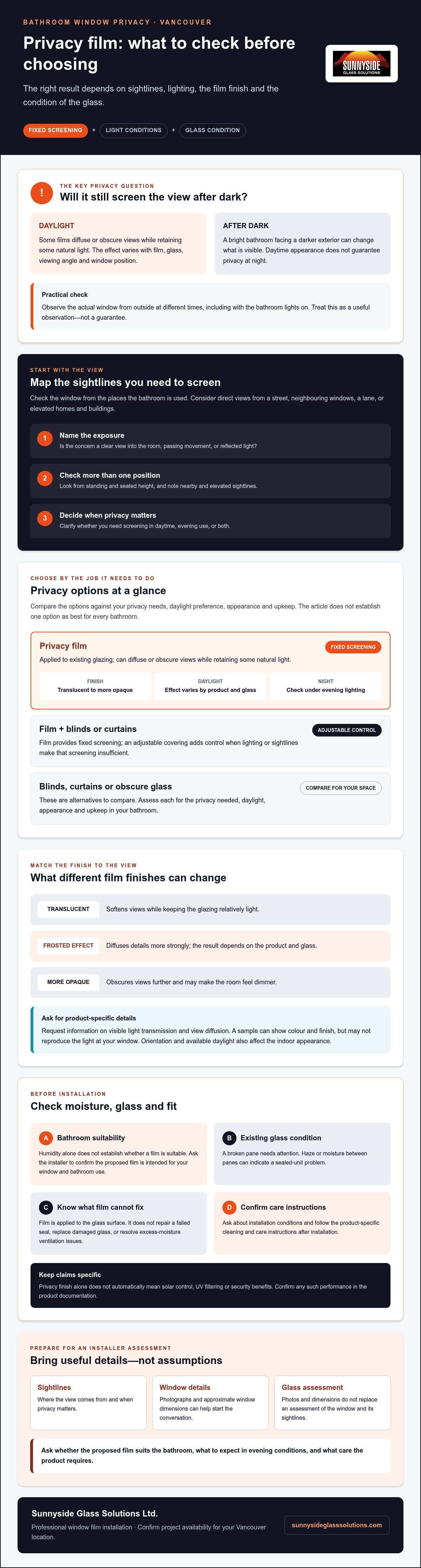
Check the window from the positions where the bathroom is used, including standing and seated height. Note views from the street, neighbouring windows, a lane, or elevated homes and buildings. Also distinguish a clear view into the room from passing movement or reflected light, which may be distracting without revealing the interior.
If practical, check the window from outside at different times of day and with the bathroom lights on. Treat this as a useful observation, not a guarantee: changing light and viewing angles can alter what’s visible. Share what you notice during an assessment.
Does privacy film work at night?
Indoor lighting can change visibility through some film types. If a bright bathroom faces a darker exterior, a film that diffuses views may not provide the same privacy as it does in daylight. Test the actual window under evening conditions, or discuss nighttime exposure before choosing a film. A daytime appearance doesn’t prove that the window will be private after dark.
If dependable nighttime privacy is essential, consider combining film with an adjustable treatment, such as curtains or blinds. Film provides fixed screening, while a covering adds control when lighting or sightlines make that screening insufficient.
How Bathroom Privacy Film Handles Light, Moisture, and Existing Glass
Privacy is only one part of choosing a bathroom film. The finish also affects how clearly you can see through the window and how much daylight enters the room. Translucent films soften views while keeping the glazing relatively light. Frosted-effect films diffuse details more strongly, while more opaque films obscure views further and may make the room feel dimmer. The precise effect varies by product and glass.
How do frosted and decorative films affect daylight?
Diffusing a view can reduce clear visibility without blocking all daylight. This may suit a bathroom where a direct view is the concern but a bright feel still matters. Colour, pattern, and opacity affect the appearance from both sides, while window orientation and available daylight influence how the film looks indoors.
Ask for product-specific information on visible light transmission and view diffusion rather than relying on a sample alone. A sample can help you assess colour and finish, but it may not reproduce the light conditions at your window. The International Window Film Association is another source of general information about window film and professional installation.
What should you know about bathroom moisture and glass?
Bathroom humidity by itself doesn’t establish whether a particular film is suitable. The selected film, its application, and installation conditions all matter. Ask the installer to confirm that the proposed film is intended for your window and bathroom use, and follow the product-specific cleaning and care instructions after installation.
Inspect the glazing before planning film. A broken pane needs attention, and haze or moisture between panes can indicate a problem with a sealed window unit. Film is applied to the glass surface. It doesn’t repair a failed seal, replace damaged glass, or resolve a ventilation issue that allows excess moisture to build up.
Keep privacy separate from other performance claims. A privacy finish doesn’t automatically provide solar control, UV filtering, or security benefits. Those depend on the specific film and should be confirmed through product documentation. If glass is damaged or appears fogged between panes, address its condition before deciding whether film is appropriate.
For privacy film for bathroom windows Vancouver, a professional assessment can take the window’s condition, bathroom environment, and desired level of view diffusion into account. You can review professional window film installation as a next step and confirm project availability for your Vancouver location.
Privacy Film vs. Blinds and Obscure Glass for Vancouver Bathrooms
Choosing a bathroom privacy treatment means balancing fixed or adjustable coverage, daylight, appearance, and maintenance. Privacy film is applied to the surface of existing glass; obscure glass changes the glazing itself. Neither option is right for every bathroom.
Use this comparison as a starting point. Actual privacy and daylight depend on the window, product, sightlines, and lighting conditions.
When is privacy film a practical choice?
Film may be worth considering when the existing glass is in sound condition and you want a fixed treatment without adding a window covering. It can also suit a window where blinds or curtains would obstruct access, interfere with nearby fixtures, or feel visually bulky. Depending on the film, the finish can soften views while still allowing daylight into the room.
Don’t assume a sample or product description guarantees a particular view or light level in your bathroom. Ask for an assessment of the glass, window position, and sightlines before selecting a film. For privacy film for bathroom windows Vancouver, base the choice on the privacy you need and the conditions at the specific window.
When might blinds or obscure glass suit better?
Blinds and curtains can be opened, closed, or adjusted. That flexibility is useful if you want an unobstructed view at some times and more coverage at others, but they need space and routine cleaning. Obscure glass may suit a renovation or glazing replacement where you want privacy built into the window rather than added as a surface treatment.
Compare options against your daily routine: whether privacy needs to change, whether a covering can fit comfortably, and how much light and visual openness you want to retain. If the window is damaged or fogged between panes, address the glass condition before deciding on a surface film.
How to Prepare for Bathroom Privacy Film Installation in Vancouver
A little preparation helps an installer assess the window and understand what you need from the film. Before requesting an assessment, map the sightlines, define when privacy matters, inspect the glass, and gather basic window details. This gives the conversation a clear starting point without assuming a particular film will suit the application.
What should you check before requesting an assessment?
Note the views you want to screen and whether the concern is daytime, nighttime, or both. Record the window’s approximate dimensions and orientation, along with nearby buildings or other sightlines. If the glass appears damaged or hazy, or has moisture between panes, mention that as well. These details help the installer understand the situation before assessing the glass.
Take photographs from inside the bathroom and, where practical, from relevant viewing positions outside. Photos can support an initial conversation, but they can’t show every change in visibility caused by lighting or angle. If the property is part of a strata or another managed building, check whether its rules require approval before altering the glazing.
What should you ask a Vancouver film installer?
Use the assessment to clarify how the proposed film is expected to look and perform on your window. Ask:
Is this film suitable for the specific glass and bathroom application?
How might indoor lighting affect privacy after dark, and what should I expect for daylight and outward views?
Is there product documentation for the film’s appearance and light transmission?
How should the glass be prepared, and what cleaning or care instructions apply after installation?
What does the assessment and installation process include, and is service available for my address?
Also mention any existing coatings or treatments you know about. The installer can consider them alongside the glass type and condition when assessing compatibility. If there’s a problem with the glazing, ask whether it should be addressed before film is considered. Film won’t repair damaged glass or a failed sealed unit.
For privacy film for bathroom windows Vancouver, clear answers about suitability, evening privacy, and care help you compare recommendations with your actual needs. To discuss an assessment and the professional window film installation process, contact Sunnyside Glass Solutions and confirm availability for your location.
Choosing Bathroom Privacy Film with Sunnyside Glass Solutions
A sound choice starts with the window, not a film sample. First identify the sightlines you want to screen, then decide whether privacy is needed during the day, after dark, or both. Consider how much daylight you want to retain and what appearance suits the bathroom. With those priorities clear, the glass and proposed film can be assessed for compatibility.
Sunnyside Glass Solutions provides professional window film installation for residential and commercial clients, with solutions tailored to privacy and other functional needs. The company serves the Okanagan Valley, including Penticton, Kelowna, Summerland, Peachland, and West Kelowna, and lists Vancouver as a service location. Confirm availability for your specific property. The right recommendation depends on the glass, its condition, the bathroom application, and your privacy goal.
What information helps an installer recommend a film?
For a useful initial conversation, share where the window is located and what can be seen from outside. Describe your preferred appearance, whether the room needs to retain daylight, and when privacy matters most. Approximate dimensions and photographs can help explain the situation, but they don’t replace an assessment of the glass and sightlines.
Mention any visible damage, haze, moisture between panes, or existing coatings. Ask for product-specific guidance on expected appearance, light transmission, evening privacy, and care. These details help frame a recommendation around the actual window rather than a general description of film.
When should glass replacement be discussed instead?
If a pane is broken or a sealed unit appears fogged, the issue may need to be assessed as a glass replacement matter before film is considered. Applying film won’t repair a damaged pane or failed seal. Sunnyside Glass Solutions also provides sealed window unit replacement. Ask whether the condition you’ve noticed warrants that type of assessment.
For privacy film for bathroom windows Vancouver, confirm service availability for your specific property before setting expectations about next steps. A clear discussion of your privacy needs and the window’s condition can help determine whether film is appropriate or whether the glass needs attention first. Contact the team to discuss the bathroom window, your privacy goals, and the assessment process.
Choose a Bathroom Privacy Solution with Confidence
The right treatment depends on the views you need to screen, how much daylight you want to keep, and whether privacy matters after dark. Film can provide fixed screening, but its performance varies with the product, lighting, sightlines, and glass. Check the window’s condition and confirm film suitability before proceeding. Damaged or fogged sealed glass may need to be assessed as a glass replacement issue instead.
Sunnyside Glass Solutions provides professional window film installation and glass replacement services in the Okanagan Valley, including Penticton, Kelowna, Summerland, Peachland, and West Kelowna, with Vancouver listed as a service location. For privacy film for bathroom windows Vancouver, discuss your window’s location, privacy goals, preferred appearance, and any glass concerns. Confirm service availability for your specific property.
Ask Sunnyside Glass Solutions about bathroom window film and take the next step toward a privacy solution that fits your bathroom.
Frequently Asked Questions
Does privacy film for bathroom windows provide privacy at night?
Not necessarily. Privacy at night depends on the film, sightlines, and the difference between indoor and outdoor lighting. If the bathroom is brightly lit and it’s dark outside, some films may provide less privacy than they do during the day. Test the window under evening conditions and ask an installer how the specific film is expected to perform. Consider blinds or curtains as an additional layer if dependable nighttime coverage is essential.
Can people see through bathroom privacy film when the lights are on?
Possibly, depending on the film and lighting conditions. A translucent or frosted-effect film diffuses views, while a more opaque option obscures them further; neither should be assumed to block every view in every situation. A bright bathroom facing a darker exterior can change how visible the room is through some films. Ask for product-specific guidance and consider testing a sample in comparable lighting before making a decision.
Is privacy window film suitable for a humid bathroom?
It may be suitable, but bathroom humidity alone doesn’t confirm that a particular film is appropriate. Suitability depends on the product and the exact application, so ask the installer to confirm that the selected film is intended for your bathroom window. Discuss preparation and aftercare, then follow the product-specific cleaning instructions. Film won’t resolve an underlying ventilation issue or repair glass that’s damaged or failing.
Does frosted film block natural light from a bathroom window?
Frosted-effect film diffuses views and can still allow daylight through, but the amount of light and the room’s appearance depend on the film’s opacity, colour, and pattern, as well as the window’s orientation. More opaque finishes may make a room feel dimmer than lighter, translucent choices. Ask the installer for product-specific light-transmission information and consider how the sample looks in your bathroom’s lighting.
Can bathroom privacy film be installed on any type of glass?
No. Film suitability depends on the type and condition of the glass, any existing coatings, and the film selected. A professional assessment can help determine whether the proposed film is appropriate for the specific window. Mention visible damage, haze, or moisture between panes before installation is considered. Film is a surface treatment, so it won’t fix a broken pane or failed sealed unit.
How do I choose between privacy film, blinds, and obscure glass?
Choose based on whether you need fixed or adjustable coverage, how much daylight you want, and the window’s condition. Film adds a fixed treatment to existing glass; blinds and curtains can be adjusted but need space and regular cleaning. Obscure glass builds privacy into the glazing and may be worth considering during renovation or replacement planning. Compare the options against your bathroom’s sightlines and everyday use.
Does Sunnyside Glass Solutions install bathroom privacy film in Vancouver?
Sunnyside Glass Solutions provides professional window film installation, and Vancouver is among its listed service locations. Confirm availability for a specific bathroom window or property before planning the work. Share the window’s location, approximate dimensions, privacy concerns, and any known glass issues when you inquire. The team can discuss whether an assessment is appropriate and what information is needed to consider a suitable film.


Comments