
Solar Film for South-Facing Windows in Summerland, BC

Could solar film make a sun-soaked room more comfortable without leaving it noticeably darker or affecting the glass? That balance is central to choosing solar film for south-facing windows Summerland, where strong sun can make indoor spaces feel uncomfortably warm. It’s also reasonable to want clear views and confidence that a film suits your existing windows.
Film can reduce solar heat entering through glass, but results depend on the film, the window and the room. It won’t correct a failed sealed unit or resolve every cause of overheating. This guide explains what solar film can and can’t change, and how to compare visible light transmission (VLT) with total solar energy rejection (TSER) when weighing brightness against solar control.
You’ll also learn why glass construction matters before a film is selected, what details to gather about your windows and comfort concerns, and when a professional assessment can help. Sunnyside Glass Solutions Ltd. has installed window film across the Okanagan for more than 25 years, including in Summerland, and can assess exposure, existing glazing and desired appearance before recommending an approach.
Table of Contents
Why south-facing windows in Summerland can need solar control
Strong sunlight through a south-facing window can create glare on screens, brighten a room unevenly and make the area near the glass feel warm. That doesn’t mean every south-facing room overheats. Exterior shade, nearby reflective surfaces, the type and condition of the glass, how the room is used, and the season all influence what you notice.
Solar control window film is a thin layer applied to glass to manage selected effects of sunlight, such as solar heat, visible light and ultraviolet radiation. Different films balance these effects differently, so the best fit depends on the room and glazing, not orientation alone. As a general introduction to the material and its uses, see Window film.
What south-facing exposure can mean for Summerland homes
Pay attention to when discomfort occurs. Does direct sun reach a desk or seating area at a particular time? Is glare coming from a bright surface outdoors, even when sunlight doesn’t fall directly on the glass? Or does the room feel warm more generally, including away from the window? These patterns can help distinguish direct solar exposure, reflected glare and broader indoor heat that may have other causes.
Shading from trees, roof overhangs or neighbouring buildings can change the amount of sun reaching the glass. Room use matters, too: glare may be especially disruptive in a workspace, while a living area may be more affected by warmth or fading concerns. Record the room, time of day and season when the problem is most noticeable before comparing film options.
What solar film can and cannot do
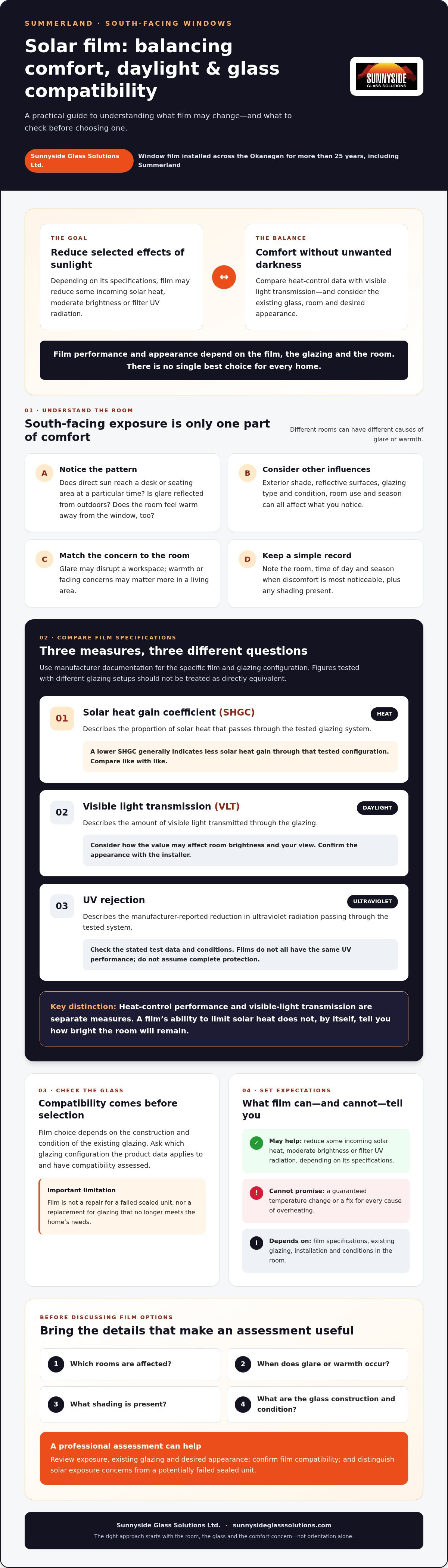
Depending on its specifications, solar film may reduce some incoming solar heat, moderate brightness or filter UV radiation. Check the technical data for the specific film under consideration rather than relying on broad claims: its performance and appearance can vary. Results also depend on the existing glazing, installation and conditions in the room, so a film shouldn’t be expected to deliver a guaranteed temperature change.
Film is not a repair for a failed seal or a replacement for glazing that no longer meets the home’s needs. If a sealed unit appears to have failed, that issue may call for a different assessment. For more on the installation process and factors to discuss, read the Okanagan window film installation guide. For solar film for south-facing windows Summerland, assessing the glass and the room’s actual comfort concerns is a practical starting point.
How solar film balances heat, daylight, and UV protection
Film specifications help you compare what a particular option is designed to do, but they don’t identify one best choice for every home. Look for manufacturer documentation and check which glazing configuration the figures apply to. The same film can perform differently depending on the glass it’s tested with, so avoid comparing figures drawn from different glazing setups as if they were directly equivalent.
Which film specifications should homeowners compare?
Three measures can help make the trade-offs clearer: solar heat gain coefficient (SHGC), visible light transmission (VLT), and UV rejection. Each describes a different outcome, and the manufacturer’s data sheet should provide the relevant values for the specific film and glazing.
Heat-control performance and visible-light transmission are separate measures: a film’s ability to limit solar heat doesn’t tell you by itself how bright the room will remain.
How to balance comfort with natural light
Before choosing an appearance, decide what matters most in the affected room. Do you want less heat while keeping the space bright? Is glare on a screen the main concern? Do you need to preserve a clear outward view, or is added privacy also a priority? Films can differ in how they balance these needs, and stronger solar control may come with changes to daylight or the window’s exterior appearance.
Ask for manufacturer specifications for the proposed film on glass comparable to your own, then review both performance figures and appearance options. If suitable data isn’t available for your glazing, treat a comparison cautiously and have compatibility confirmed before selecting a film. The residential window film guide offers broader selection context. A professional assessment can also help match the specifications to your windows and comfort goals; Sunnyside Glass Solutions Ltd. provides solar film installation in the Okanagan, including Summerland.
Which solar film considerations matter for south-facing glass?
A south-facing window doesn’t automatically need the same film as another south-facing window. The right choice depends on what you want to improve, how much daylight and view you want to preserve, and whether the film is compatible with the existing glazing. Two windows with the same orientation can have different glass, coatings, shading and room conditions, so assess each situation rather than selecting by direction alone.
Could solar film affect existing window glass?
Glass construction matters. The number of panes, any coatings, the condition of the glazing and installation details can all affect whether a particular film is suitable. Manufacturer guidance should be checked against the actual window, not assumed from the home’s age or orientation. If you don’t know what type of glass you have, or the window already shows signs of damage or other issues, a professional review can help clarify what should be considered before film is selected.
When film may not address the underlying problem
Solar discomfort and moisture between panes are different concerns. Glare or warmth during sunny periods may prompt a discussion about solar film; fogging or moisture that appears between panes may point to a sealed-unit issue instead. Film won’t repair a failed seal. If you suspect seal failure, review this guide to sealed window unit replacement to understand the separate issue.
For solar film for south-facing windows Summerland, gather any available window information and describe your priorities, such as reducing glare while preserving daylight. An installer can assess the glazing, check product documentation and help determine whether film suits the window and the problem you’re trying to solve.
How to assess south-facing windows before choosing solar film
A few observations can make an installer’s assessment more useful. Before requesting advice about solar film for south-facing windows Summerland, note what’s happening in the room and gather any window information you can access safely. You don’t need to remove trim, take apart glazing or identify every technical detail yourself.
A homeowner checklist for a Summerland window assessment
Identify the affected windows and rooms. Note which windows face south and where discomfort occurs, such as a home office, kitchen or living area.
Record when the problem happens. Note the time of day and season when direct sun, screen glare or warmth is most disruptive. This helps distinguish a brief period of glare from a longer comfort concern.
Describe existing shade and room use. List blinds, curtains, overhangs, trees or other exterior shade. Mention whether you use screens or need the room to remain bright for reading, work or other activities.
Set your priorities. Decide whether your main goal is reducing glare, limiting solar heat, filtering UV, preserving daylight or maintaining a particular view and appearance.
Gather available window details. Photograph visible glass markings, labels or existing damage from a safe position. Keep any product or renovation records you already have, but don’t dismantle the window to look for more information.
Questions to ask before installation
Use the discussion to understand how a proposed film fits your actual glass and priorities, rather than relying on a general description. Ask the installer:
Which manufacturer-documented performance measures apply to this film on glazing comparable to mine?
How might the film affect visible light, the outward view and the window’s appearance from indoors and outdoors?
What care or maintenance should I expect after installation?
How will you identify the existing glazing and confirm that the proposed film is suitable for it?
A professional assessment should consider your notes alongside the window itself. The installer can review the glass construction, check available manufacturer specifications for the relevant glazing, and discuss appearance options before recommending a suitable approach. If compatibility can’t be confirmed from the information available, ask what further details are needed before proceeding.
These notes won’t replace a glass assessment, but they give you a practical starting point and help keep the conversation focused on your comfort goals. To discuss a residential solar film assessment in Summerland, contact Sunnyside Glass Solutions Ltd.
Choosing a solar film installer in Summerland
Choosing an installer involves more than selecting a film based on a performance figure. A professional assessment should connect your comfort concerns with the windows themselves, then explain what the available product information can and can’t tell you. This matters for solar film for south-facing windows Summerland, where homeowners may want less glare or heat without sacrificing the daylight and view they value.
What a professional film assessment should clarify
The discussion should begin with the rooms and windows you’re concerned about, along with your priorities for glare, brightness, comfort and appearance. The installer can then assess the glass construction and consider whether manufacturer guidance supports using a proposed film on that glazing. Ask to review the specifications that apply to the relevant glass, rather than relying on figures that may refer to a different configuration.
Before work is planned, the assessment should also cover how the film may affect the room’s appearance and what limitations or compatibility concerns apply. A responsible recommendation sets realistic expectations: the result depends on the selected film, glazing and conditions, and a film won’t correct an underlying glass problem. If inspection suggests a failed sealed unit rather than solar exposure, that is a separate concern to discuss.
A practical next step for Summerland homeowners
Bring your notes about affected rooms, times of glare and desired daylight, along with any window labels or photos you’ve gathered. These details help focus the conversation, while the installer confirms what can be verified about the glass and film. You can also ask how the assessment will distinguish a solar-control need from a glazing issue, and what information is still needed before a recommendation is made.
Sunnyside Glass Solutions Ltd. installs solar window film for residential and commercial customers across the Okanagan, including Summerland, and has been in business for more than 25 years. The company also replaces sealed window units without replacing entire frames when inspection indicates that is the relevant issue. Local installation experience can help inform an assessment, but the appropriate approach depends on the specific windows and comfort goals.
If you’re considering film, share your window concerns and ask about an assessment. There’s no need to settle on a film before its suitability and specifications have been reviewed. You’re welcome to discuss solar film for your windows with Sunnyside Glass Solutions Ltd.
Take the next step towards a more comfortable room
Choosing solar film for south-facing windows Summerland starts with your priorities, not a one-size-fits-all product. Consider when glare or warmth affects the room, compare documented film specifications for the relevant glazing, and have compatibility checked before installation is planned. This helps you weigh comfort against daylight and appearance with clearer expectations.
If moisture or fogging appears between panes, the concern may be a sealed-unit issue rather than solar exposure. Identifying that difference can help guide the right assessment. Sunnyside Glass Solutions Ltd. has served customers for more than 25 years and installs solar film across the Okanagan, including Summerland. The team can consider your windows, comfort goals and available film information as part of a professional assessment.
Share what you’ve noticed and ask about the options for your home. Discuss solar film options for your Summerland windows with Sunnyside Glass Solutions. A careful review is a practical first step towards making an informed choice for your space.
Frequently Asked Questions
Does solar film work on south-facing windows?
Yes, solar film can help manage sunlight entering through south-facing windows, but how well it suits a particular room depends on the film, the glass and the conditions. Consider whether your main concern is direct sun, screen glare or warmth, then review the film’s documented performance for compatible glazing. South-facing orientation is a useful clue, not enough on its own to determine which film is appropriate.
Will solar film make my Summerland home cooler?
Solar film may reduce some solar heat passing through treated windows, which can make sun-exposed rooms feel more comfortable. It can’t guarantee a specific indoor temperature or solve every cause of warmth. The result depends on the film, glazing, shading, room use and other conditions. If a room feels warm even when direct sun isn’t reaching it, consider whether factors beyond the window may also be contributing.
Will solar film make my south-facing windows look dark?
Not necessarily. Films differ in visible light transmission and appearance, so some may change a room’s brightness or the look of the glass more than others. Ask to review manufacturer information for the specific film and glazing, and discuss how you want the room and outward view to look. A performance figure alone can’t tell you exactly how the finished window will appear in your home.
Can solar film be installed on any window?
No. Compatibility depends on the existing glazing, which may include different pane configurations or coatings, as well as the manufacturer’s guidance for the film. Have the glass assessed before choosing a product, especially if you don’t know its construction or it already shows damage or moisture between panes. Don’t dismantle the window to identify it. An installer can review the glazing and confirm whether proposed film is suitable.
Does solar film block UV rays and prevent furniture fading?
Some solar films are designed to reduce UV transmission, but the amount varies by product. Check manufacturer data for the specific film and glazing rather than assuming all films perform alike. Reducing UV exposure may help limit one contributor to fading, but it can’t prevent all fading; visible light and other conditions can also affect furnishings. Ask what UV performance is documented and what the information means for your windows.
How do I choose solar film for south-facing windows in Summerland?
For solar film for south-facing windows Summerland, start by noting which rooms are affected, when glare or warmth occurs, and how much daylight and view you want to preserve. Compare documented heat-control, visible-light and UV measures for glazing like yours, then ask an installer to confirm compatibility and appearance. Sunnyside Glass Solutions Ltd. serves Summerland and Okanagan communities including Penticton, Kelowna, Peachland and West Kelowna, and has operated for more than 25 years.


Comments