
Is Security Film Noticeable on Windows? What to Expect

Updated: 5 days ago
What if adding protection to your windows didn’t mean changing their look? If you’re asking “is security film noticeable on windows,” the honest answer is that visibility depends on the film’s finish, the glass, and the lighting. Clear-looking film is designed to be subtle, while tinted or reflective finishes and thicker films can be easier to see, particularly in direct sunlight.
The view may also look different from inside and outside, and reflections can shift as daylight and viewing angles change. This guide explains what to expect in different conditions, which factors influence the finished appearance, and how to weigh visual changes against the film’s role in holding shattered glass together after an impact.
For homes and businesses in Kelowna, Penticton, Summerland, Peachland, West Kelowna, and Vancouver, professional installation can help create a carefully finished result suited to the property’s glazing and appearance. Sunnyside Glass Solutions Ltd. installs security film with attention to both its protective function and how it looks once in place.
Table of Contents
Is Security Film Noticeable on Windows? The Short Answer
Sometimes, but not always. If you’re wondering, “is security film noticeable on windows,” the answer depends on the film’s finish, the existing glass, the lighting, and where you’re standing. Security film is applied to the glass already in the window; it isn’t replacement glass. The finish may be subtle or introduce a visible tint or reflection, and the glass beneath it can affect the final appearance.
Film visibility depends on its finish, the condition and appearance of the existing glass, and the light and viewing angle. That describes how the window looks, not how well the film performs its intended protective role. Film can help hold broken glass fragments together after impact, but it doesn’t make glass unbreakable. No finish should be assumed to be invisible in every setting.
What does security film look like on a window?
In everyday conversation, clear describes a finish intended to preserve a relatively natural view; tinted suggests a noticeable colour or reduction in brightness; and reflective describes a surface that shows more reflected light. These are visual descriptions, not guarantees about specific product categories or exact results. The broader types of window film vary in their uses and characteristics, so the particular finish matters.
A subtle finish may be difficult to pick out from a usual viewing distance, while a coloured or reflective appearance is more likely to change the window’s look. Film may also be easier to notice along an edge or when light catches the glass at a particular angle. Existing marks, unevenness, and other visible features in the glazing can affect what stands out after application.
Can you see security film from inside and outside?
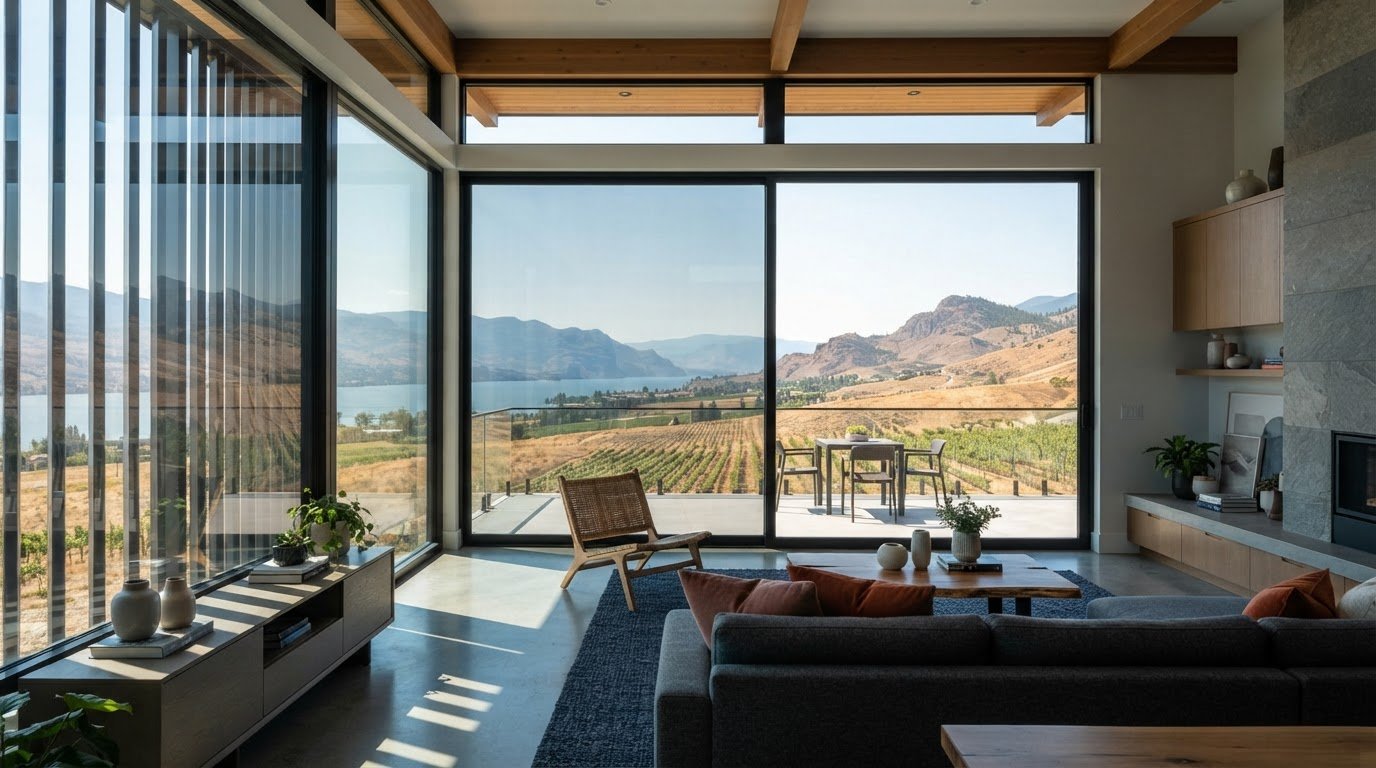
Possibly, and the two views don’t have to look identical. Reflections and contrast shift with the balance of light on either side of the window, as well as the observer’s position. On a bright day, for example, the exterior may show more reflected surroundings while the interior view looks different. In the evening, indoor lights can change which side appears brighter and how reflections are perceived. These are possibilities, not fixed outcomes.
For a commercial property, consider how the glazing looks from the street and from inside work areas, entrances, or customer spaces. The practical question is whether the chosen appearance suits the window’s purpose and how people see it throughout the day. That perspective is also relevant to Commercial Security Window Film in the Okanagan, where the visual effect needs to fit the property’s glazing and setting.
Look at a representative window from both sides, at the usual viewing distance and at more than one time of day. A finish that seems unobtrusive in one light may be easier to spot in another. This gives you a more useful basis for comparing appearance with the protective function you want from security film.
Why Security Film Visibility Changes from Window to Window
Two windows in the same building can show different visual effects after film is applied. The finish is only one factor: existing glass, nearby surroundings, light levels, and the viewing angle all influence what catches the eye. That’s why a sample or a single pane viewed in one setting may not represent how the film will look across a home or commercial property.
How do lighting and viewing angles affect appearance?
Bright daylight can make reflections of the sky, trees, or neighbouring buildings more apparent, while a shaded window may show less reflected detail. Looking straight through the glass can also give a different impression than viewing it at an angle, when reflections and contrast may be more noticeable. These shifts are viewing effects, not necessarily a defect in the film.
After dark, the balance can change again. If a room is brightly lit and it’s darker outside, interior details and reflections may stand out more from outdoors. The result depends on relative light levels, surroundings, and the particular glazing, so treat this as a possibility rather than a guaranteed effect.
Before deciding what appearance to expect, observe representative windows from both sides in bright daylight, shade, and evening conditions with indoor lights on. Include panes that face different directions or look onto different surroundings. This comparison can help you decide whether a visual change is acceptable in the rooms or public-facing areas where appearance matters most.
How can existing glass and window details matter?
The glass itself shapes the finished look. Existing tint or coatings may influence colour and reflections, while visible marks or unevenness can affect what stands out. Nearby walls, trees, and other buildings may also appear in the glass as reflections. Consider the pane configuration, too, rather than assuming every window will look identical once treated.
An insulated glass unit (IGU) consists of multiple panes sealed together as one unit. Security film is applied to existing glass; it isn’t a replacement IGU and doesn’t renew a seal within the unit. If a window already looks different from adjacent panes, the existing glazing may be contributing to that variation.
At close range, an edge or installation detail may be easier to notice than from across a room or outside the building. Viewing distance and the way the window is framed or finished can matter alongside the central viewing area. Assessing representative glazing helps set realistic expectations without treating every difference in appearance as a film issue.
For homes and commercial properties across the Okanagan, a project-specific review connects these visual considerations with the existing windows. Sunnyside Glass Solutions Ltd.’s security film installation is tailored to residential and commercial glazing, with attention to a carefully finished result.
Clear, Tinted, or Reflective Security Film: Comparing the Visual Trade-Offs
Appearance can help narrow your preferences, but a finish label doesn’t guarantee how every window will look. Existing glass, lighting, viewing distance, and the film’s specifications all affect the result. The comparison below describes general visual effects, not fixed product categories or promised outcomes.
These descriptions can overlap, and a finish’s suitability depends on the property and the film specification. A visual preference shouldn’t be treated as proof of a particular protective performance. If appearance is a priority, consider how the finish will look on the actual glazing rather than relying on its label alone.
Does clear-looking security film stay completely invisible?
No finish should be assumed to be invisible in every condition. “Clear-looking” describes an intended appearance, not a promise that the film can never be seen. Reflections, close inspection, an exposed edge, or differences in the existing glass may make it more apparent. The effect can also vary from pane to pane, so a discreet appearance at one window doesn’t guarantee the same impression across the property.
How does security film differ from solar or privacy film?
Security film’s primary purpose is to help hold glass fragments together after breakage. Solar film is selected for solar-control goals, such as managing heat or glare, while privacy-focused film aims to alter visibility between spaces. As industry specialists like Mr Tint emphasize across residential and commercial projects, these purposes can overlap in appearance, but the word “security” alone doesn’t mean a film will be tinted or reflective, or that it will provide privacy.
Sunnyside Glass Solutions Ltd. installs both security and solar window films for residential and commercial properties across the Okanagan. If you’re comparing film types, the broader guide Professional Window Film Installation: The Ultimate Guide for Okanagan Homeowners offers additional context on how film choices relate to a property’s needs. For security film, a project-specific assessment matches visual expectations to the existing glazing without treating appearance as a substitute for protective function.

How to Assess Security Film Appearance Before Installation
A useful assessment starts with how each window is used, where people usually view it from, and what appearance you want to preserve. Rather than judging one pane in a single light, identify representative windows and consider how they look from inside and outside. This makes it easier to describe your priorities and set realistic expectations before work begins.
Start with purpose: Note whether a window faces the street, serves a busy entrance, or looks into a private room. Its role can affect how much a change in colour or reflection matters.
Consider viewing distance: Check the glass from the usual standing or walking distance, then look closer to see whether edges or existing surface details become more apparent.
Define the desired appearance: Decide whether you prefer a subtle effect or are comfortable with a more visible tint or reflection. Note what you most want to avoid, such as a strong change in brightness.
Choose representative glazing: Include panes with different orientations, glass conditions, or layouts rather than assuming one window represents the entire property.
Compare typical lighting: Look in daylight and shade, then revisit after dark with interior lights on. Observe from both sides where practical.
Which windows and viewpoints should you assess?
Give street-facing windows particular attention if their appearance matters from the approach to your home or business. In high-traffic areas, consider how the glass looks to people passing close by as well as those farther away. Interior-facing panes may have different priorities, such as preserving a consistent look across a room. Assess each window in ordinary use, not only from close up, and include both daytime and evening views.
If several windows are similar, compare a representative pane from each type of glazing. Note the direction it faces, nearby surroundings, and whether you viewed it from indoors or outdoors. These details help distinguish a difference caused by lighting or reflections from one related to the glass itself. If the answer to “is security film noticeable on windows” matters especially for one area, make that pane a priority during the assessment.
What should a professional assessment account for?
A professional assessment considers the existing glazing, pane layout, visible edges, access, and the appearance you want across the property. These details help shape the installation approach and identify where close viewing may make finishing details more noticeable. Careful preparation and consistent application contribute to a considered finish, while expectations should be specific to the windows rather than based on a universal promise of invisibility.
Keep brief notes or photos of the same panes in different lighting and from the same viewpoints. This gives you a practical reference when discussing the intended appearance and helps keep priorities consistent across rooms or a commercial frontage.
Okanagan homeowners and businesses can explore Sunnyside Glass Solutions’ security film installation for a professionally finished approach tailored to their property’s glazing.
Professional Security Film Installation in the Okanagan: What to Expect
Professional installation connects your appearance preferences with the windows already in place. The glass, pane layout, edges, access, and intended use of each area all help shape the approach. Discussing these details before work begins sets practical expectations, whether your priority is a discreet finish in a home or a consistent look across a commercial property.
The question “is security film noticeable on windows” doesn’t have one answer for every building. An installer can assess the actual glazing and consider how the film’s appearance fits the property, rather than relying only on a general description of a finish. Security film is applied to existing glass, and its intended protective function should be considered separately from how visible it may be.
What happens during a professional film installation?
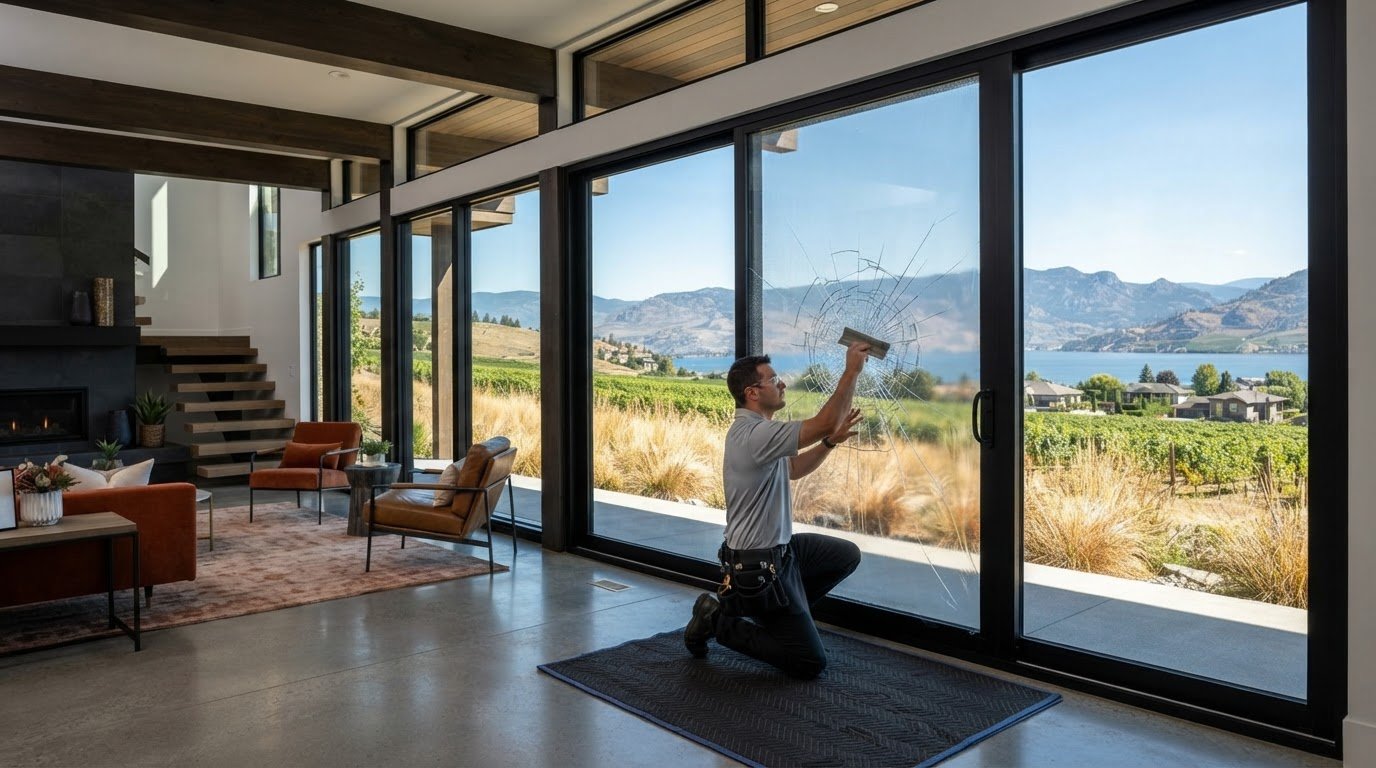
The process generally begins with an assessment of the glazing, the project’s needs, and the appearance you want. The glass is then prepared to create a suitable surface for careful film application. The approach is tailored to the windows and project rather than assumed to be identical for every pane.
After application, a visual review lets you see the finished work in context, including the placement and visible edges. Professional workmanship focuses on preparation and a consistent finish across the treated glazing. The appearance can still vary with the glass and lighting, so installation isn’t a promise that film will be invisible from every viewpoint.
Sharing your priorities early makes the assessment more useful. For example, you might want to preserve the existing appearance of a street-facing window while placing greater importance on consistency across a commercial frontage. The installer can account for those different visual expectations while considering the glazing and practical purpose of the project.
How can Sunnyside help with security film?
Sunnyside Glass Solutions provides professional security film installation for residential and commercial properties across the Okanagan. The company brings a careful, property-focused approach to installing window film, with attention to a well-finished result and the film’s practical protective role.
Service communities include Kelowna, Penticton, Summerland, Peachland, West Kelowna, and Vancouver. Whether you’re assessing a few home windows or glazing across a commercial property, professional installation can align the chosen finish with the existing glass and the way each space is used.
For a considered security film solution in the Okanagan, explore Sunnyside’s window film installation services.
Plan a Window Film Choice That Fits Your Property
Choosing security film is also a chance to be deliberate about how your space should look and feel once the glass is treated. Before moving ahead, decide what matters most for each area: keeping a familiar view, accepting a more noticeable finish, or making protection the priority while considering appearance alongside it. Clear preferences can guide a practical conversation about your windows.
If you’re still asking, “is security film noticeable on windows,” the most useful expectation is one based on your own glazing and how you use the space. A professionally considered installation brings those visual preferences together with the film’s protective purpose, without assuming one finish suits every pane or property.
Sunnyside Glass Solutions installs security and solar window film for residential and commercial properties across the Okanagan, including Kelowna, Penticton, Summerland, Peachland, West Kelowna, and Vancouver. Explore professional security film installation with Sunnyside Glass Solutions and take a considered next step toward windows that suit your property’s needs.
Frequently Asked Questions
Is security film noticeable on windows?
It can be, depending on the finish and the glass it’s applied to. A clear-looking finish may preserve a familiar view, while a coloured or reflective appearance is easier to perceive. For a practical preview, compare a representative window with nearby untreated glass from the room where you spend the most time. Differences may stand out more in a matching pair of windows than on a single pane.
Can you see security film from inside the house?
Yes, it may be visible from indoors, although the impression depends on the glass, finish, and light in the room. Look through the window at familiar details, such as a garden fence or neighbouring roofline, and notice whether colour or contrast seems different. A close look near the frame can also reveal details that aren’t apparent while seated across the room.
Does security film make windows look tinted or reflective?
Not necessarily. Security film can have different visual effects, and the word “security” alone doesn’t mean a window will become dark or mirror-like. If preserving a neutral view is important, make that preference clear during planning. Also consider the glass already in place: existing tint or coatings may influence how a chosen film looks, so don’t judge the result by the film description alone.
Can security film be applied to double-pane windows?
Security film can be considered for double-pane windows, but the specific glazing and film need to be assessed together. A double-pane window is typically an insulated glass unit with two panes sealed around an insulating space. Applying film doesn’t replace the unit or repair a failed seal. A professional assessment helps identify the glazing configuration and guide a suitable installation approach for that window.
Does security film make glass unbreakable?
No. Security film doesn’t make glass unbreakable or bulletproof. Its role is to help hold glass fragments together if the pane breaks, which can reduce flying shards and make entry more difficult. It doesn’t prevent every impact from breaking the glass, and the outcome depends on the circumstances. Think of it as a protective layer for existing glazing, not a substitute for unbreakable glass.
Will security film look different at night?
It may. After dark, bright indoor lighting can make reflections or interior details more visible from outside, while the view from indoors can feel different if it’s darker beyond the glass. For example, a front window that looks unobtrusive during the day may attract more attention when the living room lights are on. Review the actual window at night before settling on an appearance expectation.
Can security film be removed from a window?
In many cases, film can be removed, though the work depends on the film, its age, and the glass beneath it. Removing it may take care to avoid damage to the glazing or surrounding finishes, and adhesive residue may need attention. If you plan a change, a professional can assess the window and determine an appropriate removal approach rather than treating it like ordinary peel-off material.
Is security film suitable for homes in the Okanagan?
It can be a practical option for Okanagan homes when the film and installation are matched to the property’s glazing and goals. Sunnyside Glass Solutions installs residential and commercial security film in Kelowna, Penticton, Summerland, Peachland, West Kelowna, and Vancouver. A property-specific assessment helps you consider appearance alongside the protective purpose before choosing a solution.
Comments