
Safety film for sliding glass doors Peachland: compare film types

Safety film doesn’t replace a sliding glass door; it changes how the glass behaves if it breaks. For homeowners considering safety film for sliding glass doors in Peachland, the key point is that professionally installed film can be fitted to existing glass, help hold broken pieces together and make forced entry more difficult.
It’s reasonable to want more protection while keeping the door already in place. Safety and security films are often described using overlapping terms, so compare what each option is intended to do: reduce breakage, retain fragments after impact, or add resistance to burglary and vandalism.
This guide explains the differences, how film works on existing sliding doors, and why glass type and installation matter. You’ll be better equipped to weigh the practical trade-offs and decide whether a professional retrofit is suitable for your home.
Table of Contents
Retrofitting existing windows and doors
Film can be applied to existing glass, making it a retrofit option for sliding doors. Suitability depends on the glass, door construction and the protection goal.
Safety and security window films
Safety and security films are applied to existing glass to help reduce the likelihood of breakage and hold glass together if it breaks. On a commercial property, film can add a protective layer to large glazed areas without replacing every pane. Its purpose is to change how glass behaves after impact, not to make the door unbreakable. Performance also depends on the glazing and installation.
Film suitability for sliding glass doors
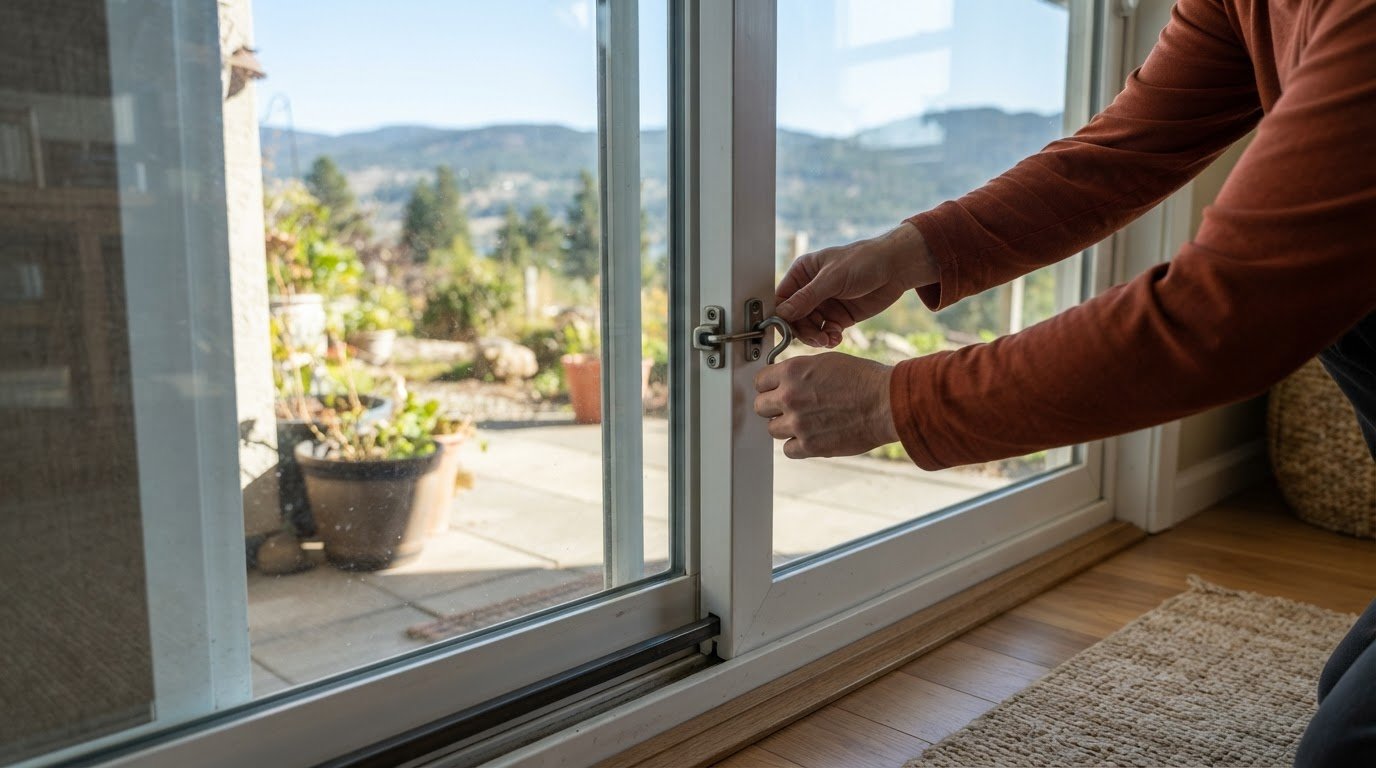
Safety and security films may suit sliding doors, adjacent glass and large panels exposed to impact. These areas deserve attention because people often pass nearby or use the door as an entry point. Ground-accessible windows and doors in busy areas can be sensible retrofit priorities. Glass type can affect how safety and security films perform, so suitability should be assessed for the specific door.
Thickness and performance ratings
A 07 mil safety film is available in a 60-inch width. Thickness and width describe product specifications, but thickness alone doesn’t establish how a complete installation performs. Compare the film’s stated purpose with the door’s glass type and the desired retention approach. Where the glazing calls for it, anchoring also matters. A professional assessment considers the pane and frame together.
Film risks and limitations
Film doesn’t make glass unbreakable, and a retrofit won’t repair a damaged door or unsuitable glazing. Film life depends on the product, installation and site exposure; care instructions and warranty terms also vary by product. Cost depends on film type, glass area, condition and access, so it is determined for the specific project.
Choose based on the door’s glass type and whether your priority is reducing breakage, retaining fragments or resisting entry.
Glass retention and injury prevention
Safety film bonds to the glass surface and helps hold fragments together if a pane breaks. It doesn’t prevent every break, but it can reduce how readily loose shards scatter. Beside a sliding door, that distinction matters because people pass through the opening and may walk near the glass. Film changes how broken glass behaves; it doesn’t remove all risks associated with damaged glazing.
Retention depends on more than the film. The pane, frame and edge attachment all affect how filmed glass behaves after impact. For example, an anchored installation connects the film to the frame, while film applied only to the glass relies on its bond with the pane. These approaches hold the film differently, so the complete door assembly matters.
Does safety film make glass doors meet Canadian building or safety requirements? Film alone doesn’t establish compliance; requirements depend on applicable rules and the complete glazing assembly. A film retrofit shouldn’t be treated as proof that a door meets a particular safety standard.
Consider a sliding door beside a busy patio entrance. If its pane breaks, film may help keep fragments attached instead of scattering across the threshold. The result depends on the glass, frame, film and attachment method. The same factors apply to a fixed panel beside the doorway, especially where people regularly pass close to the glass.
To assess injury risk, consider where people stand and move around the glass. A patio threshold, walkway or frequently used entrance may warrant closer attention than glazing in a seldom-used area. Film can help retain fragments, but it doesn’t remove the need to keep people clear of broken glass and arrange appropriate replacement after damage.
A professional glass assessment can help clarify how the pane and frame affect a retention-focused retrofit.

Anti-shatter and shatterproof films
“Shatterproof film” is a common label, but it shouldn’t be understood as a promise that glass cannot break. Safety film is applied to existing glass; its adhesive helps hold fragments together if impact breaks the pane. For a sliding door, this retrofit can change how broken glass behaves without replacing the glass. The distinction matters: reducing breakage, retaining fragments and resisting forced entry are related, but they aren’t identical outcomes.
Apex lists a 07 mil safety film in a 60-inch width. Those specifications describe one film’s thickness and available width, not a universal performance rating for every door. Film selection also depends on the glass and how it is held in the frame. A professional assessment considers those details together, rather than treating thickness alone as proof of the protection a particular sliding panel will provide.
How does safety film compare with laminated or tempered glass for sliding doors? Film is fitted to existing glass, while laminated glass uses an interlayer between glass panes, and tempered glass is a different type of glass. Their construction and performance differ, so film doesn’t make ordinary glass equivalent to either type. The suitable choice depends on the existing door and the intended role of the glazing.
For a new or replacement door, laminated or tempered glazing may be considered as part of the glass specification; film instead works with an existing pane. A film system also depends on adhesion and, where needed, attachment to the frame. Without suitable anchoring, retained glass may remain in the opening, but the filmed pane can still separate from its frame. The frame and glazing matter as much as the film.
Use “shatterproof” cautiously when comparing products. Look for a clearly stated purpose, such as helping retain broken glass, and distinguish it from a claim about preventing breakage. For a Peachland sliding door, compare retrofit film with replacement glazing, considering glass type, frame compatibility and the result you want.
Burglary and vandalism deterrence
Security film can make a glass entry harder to breach by helping hold broken glass together. The aim is resistance and delay, not an unbreakable door. At a Michigan commercial property owned by the Blain Group, safety film formed a barrier that kept a break-in attempt from succeeding. This example shows how filmed glazing can complicate access, but it doesn’t establish the same outcome for every door.
For a Peachland home or business, start by identifying exposed glazing. A ground-level sliding door beside a secluded patio may raise different concerns from one facing a busy public entrance. Consider likely impact points, how people approach the glass and whether adjacent panes offer another entry route. Film selection and attachment should suit the door assembly, not just the largest pane.
Vandalism is another situation where film may be considered. An impact can crack glass without immediately clearing an opening; film may help keep fragments together rather than letting pieces fall away. This can reduce scattered shards, but it doesn’t prevent every mark, crack or break. A filmed pane may still need replacement after damage, and damaged glass should be treated as a hazard.
Before choosing a retrofit, consider these practical factors:
Exposure: Note whether the glass faces a public walkway, patio or secluded side yard.
Glazing: Identify the pane and frame, since attachment affects how the film system performs.
Objective: Separate fragment retention from resistance to attempted entry or deliberate impact.
Coverage: Include vulnerable adjacent glass in the assessment, not only the sliding panel.
For commercial glazing, the Blain Group example illustrates a security benefit without proving a universal result. A professional assessment can match a film approach to the glass, frame and exposure. Arrange a security-film assessment for your sliding door and adjacent glazing.
Sunnyside Glass Solutions Ltd.
Sunnyside Glass Solutions Ltd. helps Peachland property owners consider a film retrofit based on their existing glass and how they use the door. Its window film installation service is a practical option when a sliding door is intact and the goal is to change how its glass performs after impact. The assessment considers the pane, frame and protection priorities.
Film isn’t suitable for every door. If the glass is damaged or the glazing needs attention, a retrofit may not address the underlying issue. Distinguishing between these situations helps determine whether film installation or glass replacement is the more appropriate solution.
Plan the right next step for your door
Choosing safety film for sliding glass doors in Peachland starts with the result you want from the existing glass. A retrofit may suit a door in sound condition, while damaged or unsuitable glazing may call for another solution. Match the approach to the pane, frame and exposure rather than relying on a film label alone.
Before proceeding, consider your main priority: retaining glass after impact, making forced entry more difficult, or addressing damaged glazing. A professional assessment can match these priorities with the door’s construction and help determine whether film installation or glass replacement is the more suitable next step.
Sunnyside Glass Solutions provides window film installation and sealed window unit replacement, along with frameless glass showers. For guidance on a sliding door retrofit, contact Sunnyside Glass Solutions to discuss your glass and protection goals. A well-matched solution can help you move forward with greater clarity.
Frequently Asked Questions
How does safety film help prevent injuries from broken sliding glass doors?
Safety film helps limit injury by holding more broken glass together instead of letting fragments scatter across a doorway. On sliding glass doors in Peachland, this can matter near a patio threshold where people walk barefoot or carry items through the opening. Film doesn’t prevent every break or remove the need to keep clear of damaged glass and arrange repairs.
How much does sliding glass door safety film cost in Peachland, BC?
Cost depends on the specific door and project. Factors include the glass area, number of panes, glass type, frame details and access for installation. A large door with adjacent sidelights involves a different scope from a smaller panel. These details help determine the appropriate film and installation work, rather than relying on a generic price range.
Which companies install safety film on sliding glass doors in Peachland or nearby?
Sunnyside Glass Solutions Ltd. installs window film, including security film, for residential and commercial properties in Peachland, Penticton, Kelowna, Summerland, West Kelowna and Vancouver. For a sliding door, the installation assessment considers the existing glazing and your protection goals to determine whether a film retrofit is suitable.
Can safety film be installed on existing sliding glass doors, and how long does installation take?
Yes, safety film can be installed on existing sliding glass when the glazing and attachment approach suit the door. Installation time depends on the glass area, number of panels, surface condition, frame configuration and access. A single accessible panel involves a different scope from a multi-panel opening with adjacent glass, so timing depends on the specific installation.

Comments