
Window Film vs. New Windows for Energy Efficiency: How to Choose

Updated: 5 days ago
The most effective window upgrade may not be a new window at all. If a room gets uncomfortably hot beside sunny glass, window film may be a proportionate option. If a window is fogged between the panes, the sealed glass unit may be the problem. Choosing between window film vs new windows for energy efficiency starts with identifying what’s actually failing.
Uncomfortable rooms or rising energy use don’t automatically mean the whole window needs replacing. Film can help manage solar heat and glare, but it won’t correct a failed seal or drafts around the frame. Replacing a sealed glass unit addresses fogging while retaining a suitable frame. Full window replacement is a broader project that may be appropriate when the complete assembly needs attention.
This guide compares window film, sealed glass replacement and new windows, including what each option can and can’t improve. Use the signs you observe to distinguish a solar-control concern from a glazing or frame problem, then choose a practical next step for your home in Penticton, Kelowna, Summerland, Peachland, West Kelowna or Vancouver.
Table of Contents
Window film vs. new windows: What energy problem are you trying to solve?
How window film, sealed glass replacement and new windows work
Window film vs. new windows: Compare performance, disruption and scope
A practical Okanagan checklist for choosing the right window upgrade
Choosing window film or glass replacement with Sunnyside in the Okanagan
Window film vs. new windows: What energy problem are you trying to solve?
The better choice depends on the window’s condition and the performance problem you want to address. If a room overheats in direct sun or glare is uncomfortable, solar film may help when the existing glazing is suitable. Fog between panes, drafts or damaged frames point to different issues. Comparing window film vs new windows for energy efficiency is more useful when you first identify where the discomfort is coming from.
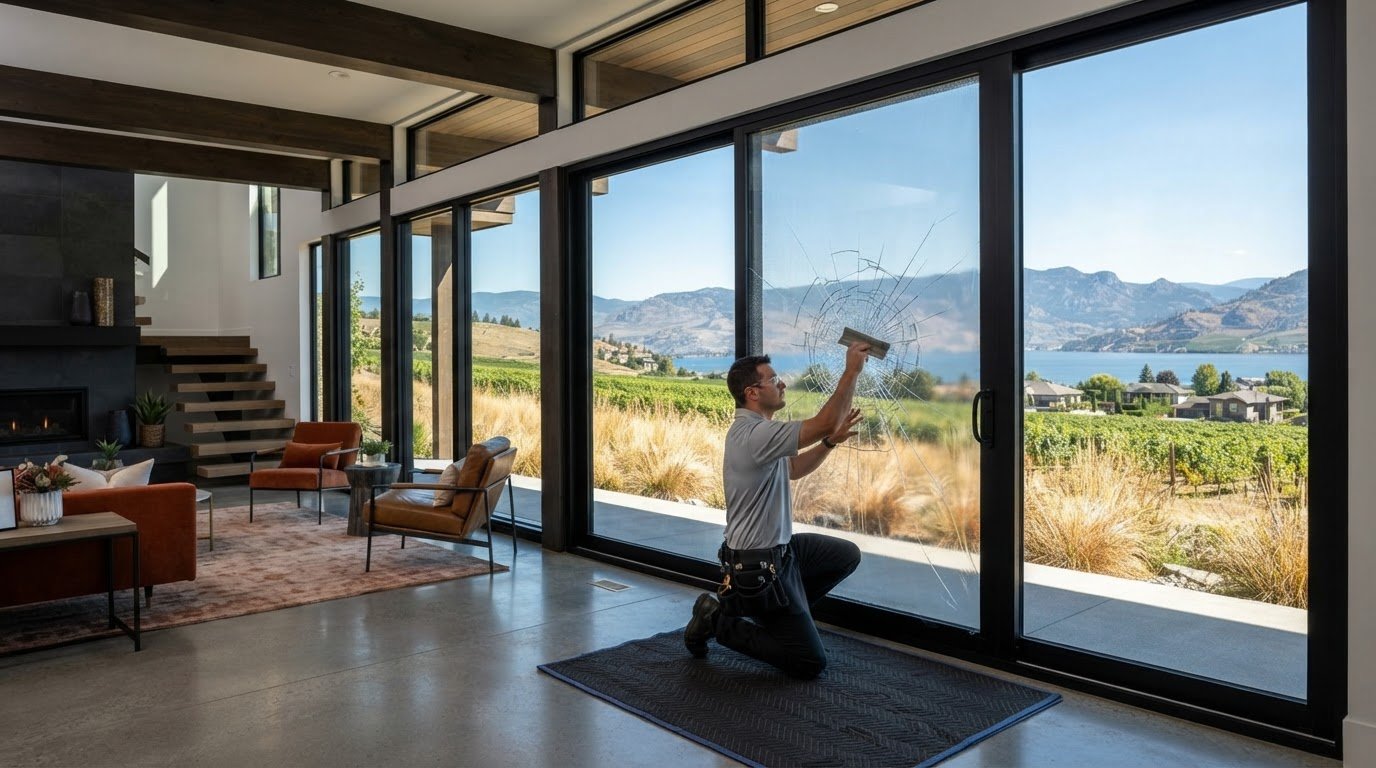
Window film is a thin layer applied to existing glass. Depending on the film and glazing, it can change how sunlight enters a room, but it doesn’t repair a failed seal, stop air leaking around a frame or fix physical damage. Replacing a sealed glass unit addresses the glazing. Full window replacement generally changes both the glazing and the frame assembly.
Use symptoms as clues, not as a diagnosis on their own:
Strong sun, glare or solar heat: Consider whether solar control is the main goal and whether the existing window remains in sound condition.
Fog or moisture between panes: This can indicate a failed sealed glass unit, which film won’t repair.
Drafts near the frame: Air leakage around the window calls for attention beyond a film layer on the glass.
Visible damage: Cracked or broken glass, or a damaged frame, needs a remedy suited to the affected component.
Condensation on the room-side surface is different from moisture trapped between panes. Note where it appears and when. That observation can help distinguish a surface comfort concern from a glazing problem.
What can window film improve?
Solar film is designed to manage incoming solar heat and glare by changing how the glass handles sunlight. The window film technology overview describes common film types and applications, but the result in a particular home depends on the film selected, the existing glazing and the installation. Suitable solar control may make a sunny room more comfortable, but film won’t restore a failed seal or correct drafts.
In short, film changes the glass surface’s solar-control performance. It isn’t a repair for a defective window.
What does replacing a window actually change?
Full window replacement generally involves removing and replacing more of the assembly, including the frame and glazing. A new unit may use different glazing, coatings, spacers and frame components—options frequently seen in modern architectural installations by specialists like View Glazing—so its overall performance can differ from that of the old window. Sealed glass replacement, by contrast, changes the failed or damaged glass unit while retaining the existing frame when it remains suitable.
Film modifies the existing glass; sealed-unit replacement changes the glazing; full-window replacement changes the broader window assembly. In Penticton, Kelowna, Summerland, Peachland, West Kelowna and Vancouver, assess each room’s sun exposure, seasonal comfort and window condition rather than assuming one upgrade suits every home.
How window film, sealed glass replacement and new windows work
These options work on different parts of a window. Film is applied to the glass already in place. Sealed glass replacement removes and replaces the insulated glass unit while keeping the existing frame if it’s suitable. Full window replacement changes the broader assembly, including the frame and glazing. This middle option matters: a failed sealed unit doesn’t automatically mean the entire window needs to come out.
A sealed insulating glass unit is two or more panes of glass sealed together with a space between them to help insulate the home. If that seal fails, moisture may become trapped between the panes. Replacing the unit targets the glazing problem without turning it into a full-frame project.
The right scope depends on three things: the condition of the existing glazing, whether the frame is sound and operates properly, and the improvement you want. A glass upgrade may address fogging, while a solar-control concern may call for a different solution. If the frame is damaged or air is leaking around it, changing the glass alone may not resolve the source of drafts.
When window film may be the relevant upgrade
Picture a living room with clear, intact windows that becomes uncomfortably bright and warm in direct afternoon sun. Solar film may be worth considering because it is designed to manage incoming solar heat and glare without replacing the window. For example, residential specialists like Sun Guard Tint illustrate how modern ceramic films can act as an effective heat shield against intense sun while maintaining clear visibility. Its performance depends on the film, the existing glazing and the installation, so don’t assume every product labelled “solar” will produce the same result.
Film selection also needs to account for the glass already installed. Different glazing types can respond differently to added film, so the glass and relevant manufacturer guidance matter when determining suitability. Film can help with solar control, but it doesn’t restore insulation lost through a failed seal or stop air movement at a frame gap. That distinction is central to choosing window film vs new windows for energy efficiency.
When glass or the full window assembly needs attention
Persistent moisture between panes can point to a failed sealed unit. Fog on the room-side surface is a different symptom and doesn’t, by itself, establish that the seal has failed. Cracked or broken glazing is another reason to consider glass replacement. Where the frame remains sound, replacing the sealed unit can address the affected glass without replacing the complete window.
Drafts need a closer look at where air is moving. A gap around the frame or a window that doesn’t close properly suggests an issue beyond the glass surface, so film or glass-only replacement may not address it. Damaged or deteriorating frames can also change the scope of work. Full window replacement generally includes the frame as well as the glazing, unlike replacement of one sealed glass unit.
For homes in Kelowna and across the Okanagan, consider the glass, frame and comfort goal together. A tailored window glass assessment can help clarify whether solar film or sealed glass replacement fits the observed condition.
Window film vs. new windows: Compare performance, disruption and scope
The right comparison is about more than which option sounds most energy-efficient. Match the work to the window’s condition and your comfort goal: solar control, clear glass after a seal failure, or a broader change to the window assembly. Exposure can differ from room to room in Kelowna and throughout the Okanagan, so assess affected windows individually instead of assuming one upgrade fits the entire home.
Which option better fits your symptoms?
Use symptoms to focus the assessment, not to jump to a remedy. If a room gets hot or glare is troublesome during sunny periods, consider its sun exposure and the condition and type of existing glass before weighing film. Moisture trapped between panes points toward inspection of the sealed glass unit. Drafts, frame damage or difficult operation call for attention to the complete assembly, since a surface treatment or glass-only replacement may leave the underlying issue unchanged.
What should homeowners compare beyond energy efficiency?
Clarify the intended result first. Is it less solar heat, clearer glazing, improved operation or attention to a damaged assembly? Then consider which existing materials can remain and how much of the window needs work. A targeted intervention may preserve a serviceable frame, while broader replacement changes more of the unit and may affect its appearance and features.
Also consider how the work could affect access to the room, window use and ongoing care. The level of disruption varies with the number and condition of windows and the scope of the project, so don’t assume every job follows the same process. If opening sections, hardware or another existing feature matters to you, include that in the comparison.
For a sound comparison of window film vs new windows for energy efficiency, look for relevant, verified specifications for the actual glazing or film under consideration. Broad claims don’t show whether a product suits your existing glass or solves the problem you’ve observed. A clear match between the condition, intended result and scope is more useful than choosing based on general efficiency language.

A practical Okanagan checklist for choosing the right window upgrade
Before comparing options, make a short record of what you notice. A sunny room that feels uncomfortable in the afternoon may need a different assessment from a window that fogs between panes or lets in a draft. This checklist connects symptoms to the part of the window that may need attention, without assuming every window in a home has the same issue.
Record the symptoms before choosing a solution
Note the room, season, window orientation and conditions when the problem occurs. Is the discomfort strongest during direct sun, on a cold morning or throughout the day? Record what you can see and whether the window still opens and closes as expected. Look only; don’t remove glazing, dismantle components or attempt repairs.
Identify the room and timing. Record which rooms feel uncomfortable and whether the issue occurs in a particular season or time of day.
Note the window’s orientation and exposure. Track where direct sunlight falls and when glare or solar heat becomes noticeable.
Describe the main symptom. Is it glare, solar heat, fog between panes, a draft, cracked glass or another visible concern?
Observe the frame and operation. Look for visible damage, gaps, difficulty opening or closing, or signs the window doesn’t sit properly.
Distinguish the signs. Moisture between panes differs from condensation on a room-side glass surface; a cold draft also differs from discomfort caused by direct sunlight.
Match the assessment to the window condition
Use your notes to describe the issue and the result you want, rather than choosing an upgrade by name. If direct sun or glare is the main concern and the glass and frame appear serviceable, a solar film assessment may be relevant. If glass is broken or moisture appears between panes, have the sealed unit assessed. Drafts, frame damage or operating problems warrant a broader look at the window.
Before proceeding, compare the proposed scope with the symptom it’s meant to address. Film changes the glass surface, so it won’t fix fogging from a failed seal or air leakage around a frame. Sealed glass replacement targets the glazing and may be appropriate when the frame can remain. A wider window concern may call for an assessment of the complete assembly. For more detail on fogged glazing, review information about sealed window unit replacement.
These observations make the window film vs new windows for energy efficiency decision more specific, especially when rooms have different exposures or symptoms. An assessment can focus on the actual glass and frame condition instead of treating the whole home as one uniform project.
For a measured next step, request an assessment of your window glass and film options with Sunnyside Glass Solutions in the Okanagan.
Choosing window film or glass replacement with Sunnyside in the Okanagan
The practical starting point is the window’s condition and the result you want. Sunnyside Glass Solutions installs solar film on suitable existing windows and replaces failed or broken sealed glass units. These are distinct solutions: film suits solar-control goals when the glazing is appropriate, while sealed-unit replacement addresses a problem within the glass itself. Neither is an automatic answer to every draft or comfort concern.
For homeowners weighing window film vs new windows for energy efficiency, match the work to the observed glass and frame condition. A fogged unit with a serviceable frame may need attention to the sealed glass, not the entire window. If the main issue is solar heat or glare through otherwise sound glass, film may be worth assessing. A concern involving frame damage, operation or air leakage needs a broader evaluation of the window.
How Sunnyside helps match the service to the problem
Professional solar film installation can support energy-efficiency and solar-control goals by applying film to suitable existing glazing. Film type, glass condition and manufacturer guidance all inform whether it’s appropriate for a particular window. Sunnyside’s professional window film installation guide and residential window film guide offer further information about the process and considerations.
For glass that’s broken or showing signs of a failed seal, Sunnyside replaces sealed window units and sealed skylight units. This is a focused glass intervention, not full window-frame replacement. Sunnyside has served the Okanagan for more than 25 years, with experience in film installation and the replacement of fogged or damaged sealed glass units.
The same distinction applies whether your home is in Penticton, Kelowna, Summerland, Peachland, West Kelowna or Vancouver. Local exposure and comfort needs vary from room to room, so a useful recommendation considers the specific window instead of relying on a blanket assumption about the whole home. The aim is to identify which component needs attention and choose a scope that fits.
Take the next step for your Okanagan home
Before discussing an upgrade, note which rooms are affected, when the discomfort occurs and what you can observe on the glass or frame. Is direct sun creating glare? Is there moisture between panes, visible damage or a draft near the frame? Sharing these details, along with the improvement you’re hoping for, helps focus the discussion on the right concern.
If the glazing is suitable and solar control is the goal, film may be a proportionate option. If a sealed unit has failed or glass is broken, glass replacement may address the problem while retaining a serviceable frame. Sunnyside installs solar film and replaces sealed glass units. Get in touch with Sunnyside to discuss your window glass or film needs and take a focused next step for your home.
Choose a window upgrade with a clear goal
Before deciding on work, identify the improvement that matters most in the room: less glare, a more comfortable temperature, clearer glass or a window that operates properly. A simple note about when the discomfort occurs and which windows are affected gives the assessment a useful starting point. It also helps keep the scope aligned with the result you want, rather than turning one concern into a larger project by default.
The choice of window film vs new windows for energy efficiency is ultimately about finding a suitable response to your home’s actual conditions. You don’t need to settle on a solution before discussing the symptoms. A focused conversation about the glass, frame and comfort goal can help clarify a proportionate next step for your Okanagan home.
Explore Sunnyside’s window film and glass services to discuss the concern and the outcome you’re hoping to achieve. With a clear goal in mind, you can move forward with a solution suited to your windows.
Frequently Asked Questions
Is window film as effective as new windows for energy efficiency?
Neither option is universally more effective; they address different conditions. For window film vs new windows for energy efficiency, film may help manage solar heat and glare through suitable existing glass, while replacement may address glazing or broader assembly performance. The result depends on the window’s current condition, the film’s specifications, installation quality and whether the home’s main concern is heat gain or heat loss. No option guarantees a particular energy saving.
Can window film fix drafty windows?
No. Film applied to glass doesn’t seal air leaks around a frame, replace failed weatherstripping or repair damaged window components. For example, if you feel a draft near the window edge rather than across the glass, the source may be a gap or an operating issue. Identify where air is entering before choosing an upgrade. Solar film can address solar-control goals, but it isn’t a substitute for work on air leakage.
What is the difference between replacing a sealed glass unit and replacing a window?
Sealed glass unit replacement changes the insulated glazing while retaining the existing frame if it’s suitable. Full window replacement involves a broader assembly and may include the frame as well as the glass. A fogged pane in a sound frame may call for a different scope than a window with deteriorated framing or hardware that no longer functions properly. The condition of both parts helps determine which project is appropriate.
How do I know if my window needs film or glass replacement?
Glare or solar heat through intact, serviceable glass may warrant assessing film; persistent moisture between panes or broken glass may point to a sealed-unit issue. Check whether condensation is on the room-side surface or trapped inside the glazing, and note whether it appears repeatedly. Drafts, frame damage or difficulty opening and closing call for a broader assessment. One symptom can be a useful clue, but it doesn’t confirm the cause by itself.
Will window film keep my Okanagan home warmer in winter?
That depends on the film, existing glazing, installation and the source of heat loss. Solar-control film isn’t automatically an insulating upgrade, and it won’t repair a failed seal or air leak. If a room feels cold, note whether the discomfort is strongest near the glass, around the frame or throughout the space. Compare that observation with product-specific performance information to determine whether winter heat loss, summer solar gain or both are the main concerns.
Should I replace all my windows if only some are foggy?
Not necessarily. Fog between panes can indicate a failed sealed glass unit, but it doesn’t establish that every window or frame needs replacement. Compare the affected windows with clear ones, and note differences in frame condition, operation and visible damage. Where a frame remains suitable, targeted sealed-glass replacement may be an option for the affected unit. Each window’s condition matters, so one fogged pane alone can’t determine the scope for the whole home.
Does window film work on double-pane windows?
It may be suitable, but compatibility depends on the specific film and the glazing construction. Before installation, consider the glass type, its condition and relevant product guidance; not every film is appropriate for every double-pane unit. This compatibility question is separate from seal condition. For homeowners in Penticton, Kelowna, Summerland, Peachland, West Kelowna or Vancouver, an assessment can help distinguish a film question from a sealed unit that needs replacement.

Comments